
Other notable published work is also included in this gallery.
This gallery includes books published in 1974, 1975, 1976, 1977, 1979, 1982, 1983, 1984, 1985, 1986, 1987, 1989, 1990, 1991, 1992, 1993, 1994, 1995, 1996, 1997, 1998, 1999, 2000, 2001, 2002, 2003, 2004, 2005, 2006, 2007, 2008, 2009, 2010, 2011, 2012, 2013, 2014, 2015, 2016, 2017, 2018, 2019, 2020, 2021, 2022, 2023, 2024, 2025, and 2026.
-
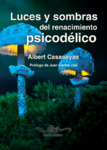
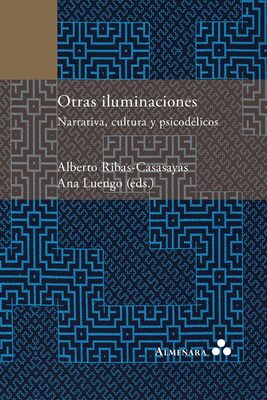
Luces y sombras del renacimiento psicodélico
Alberto Ribas-Casasayas
This essay has been acknowledged by historian Juan Carlos Usó as 'one of the best texts (...) about the rediscovery of psychedelia we're currently immersed in". Luces y sombras del renacimiento psicodélico offers a personal approach to the repopularization of psychedelics brought about by renewed scientific research and the proliferation of new spiritual and healing practices.
Thought of as an introduction for people with little or no knowledge about these 'visionary drugs,' Albert Casasayas brings the perspective of a recent initiate with a direct and passionate style that will help to demystify the usual commonplaces about these substances. At the same time, his critical focus will interest those more versed in the matter for his frank approach to the challenges and issues challenging contemporary psychedelia.
-

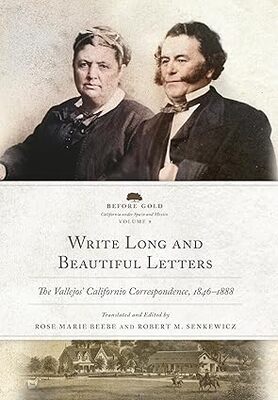
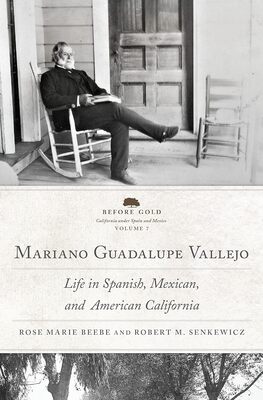
Mariano Guadalupe Vallejo: Life in Spanish, Mexican, and American California
Rose Marie Beebe and Robert M. Senkewicz
Mariano Guadalupe Vallejo (1807–90) grew up in Spanish California, became a leading military and political figure in Mexican California, and participated in some of the founding events of U.S. California. In 1874–75, Vallejo, working with historian and publisher Hubert Howe Bancroft, composed a five-volume history of Alta California—a monumental work that would be the most complete eyewitness account of California before the gold rush. But Bancroft shelved the work, and it has lain in the archives until its recent publication as Recuerdos: Historical and Personal Remembrances Relating to Alta California, 1769–1849, translated and edited by Rose Marie Beebe and Robert M. Senkewicz.
In Mariano Guadalupe Vallejo: Life in Spanish, Mexican, and American California, Beebe and Senkewicz not only illuminate Vallejo’s life and history but also examine the broader experience of the nineteenth-century Californio community. In eight essays, the authors consider Spanish and Mexican rule in California, mission secularization, the rise of rancho culture, and the conflicts between settlers and Indigenous Californians, especially in the post-mission era. Vallejo was uniquely positioned to provide insight into early California’s foundation, and as a defender of culture and education among Mexican Californians, he also offered a rare perspective on the cultural life of the Mexican American community. In their final chapter, Beebe and Senkewicz include a significant portion of the correspondence between Vallejo and his wife, Francisca Benicia, for what it reveals about the effects of the American conquest on family and gender roles.
A long-overdue in-depth look at one of the preeminent Mexican Americans in nineteenth-century California, Mariano Guadalupe Vallejo also provides an unprecedented view of the Mexican American experience during that transformative era -
Marx, Revolution, and Social Democracy
Philip J. Kain
Many people think Marx a totalitarian and Soviet Marxism the predictable outcome of his thought. If one shows them the texts-proves to them that Marx was a radical democrat--they often flip and think him utopian. Totalitarian or utopian--for many those seem to be the alternatives. How might one combat this completely mistaken image?
To establish the connection between Marx and social democracy, philosopher Philip J. Kain argues four main points. First, economy if markets are controlled to eliminate alienation, socialist society for Marx is compatible with a market. Second, markets can be controlled democratically. Third, Marx had a theory of revolution compatible with a democratic electoral movement engaged in by a social democratic party. And fourth, from the late 1860s on, Marx and Engels worked with the German Social Democratic Party of Liebknecht, Bebel, Bernstein, and Kautsky--which eventually became the largest party in Germany and the largest socialist party in the world.
If social democracy is a true expression of Marxism, then Marx cannot be called a totalitarian. There is nothing remotely totalitarian about social democracy. Nor is it utopian. It exists all over Western Europe. Moreover, social democratic parties have always opposed the undemocratic tactics of Soviet Marxism. Drawing on these four points, Kain argues against the depiction of Marx as either utopian or totalitarian, and instead makes a case for Marx as a social democrat, whose strongest legacy is found in Western Europe. -
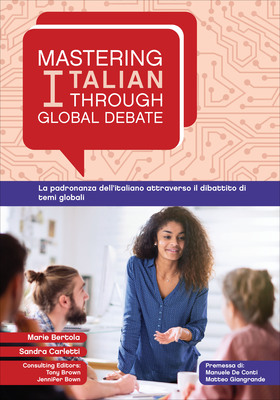
Mastering Italian through Global Debate
Marie Bertola and Sandra Carletti
Critical engagement with complex global issues that provides an effective approach to promoting linguistic proficiency and social responsibility
Mastering Italian through Global Debate is a one-semester textbook designed for students with Advanced-level Italian language skills, moving toward Superior and above. Over the course of each chapter, students gain linguistic and rhetorical skills as they prepare to debate on broad, timely topics, including environmental consciousness, immigration, wealth distribution, surveillance and privacy, cultural diversity, and education. Discussion of compelling issues promotes not only linguistic proficiency but social responsibility through critical engagement with complex global challenges.
Each chapter includes topic-specific reading texts and position papers, giving students insight into issues being widely discussed—and debated—in Italy today. In addition to pre- and post-reading activities, students benefit from lexical development exercises, rhetorical methods sections, and listening exercises with audio available on the Press website. Online resources for instructors include pedagogical recommendations and an answer key.
-

Optical Multidimensional Coherent Spectroscopy
Hebin Li, Bachana Lomsadze, Galan Moody, Christopher Smallwood, and Steven Cundiff
This book provides an introduction to optical multidimensional coherent spectroscopy, a relatively new method of studying materials based on using ultrashort light pulses to perform spectroscopy. The technique has been developed and perfected over the last 25 years, resulting in multiple experimental approaches and applications to a broad array of systems ranging from atoms and molecules to solids and biological systems.
Indeed, while this method is most often used by physical chemists, it is also relevant to materials of interest to physicists, which is the primary focus of this book. As well as an introduction to the method, the book also provides tutorials on the interpretation of the rather complex spectra that is broadly applicable across all subfields, and finishes with a survey of several emerging material systems and a discussion of future directions. -
Poétique de la nature: Romantisme et négativité, de Jean-Jacques Rousseau à Marcel Proust
Jeffrey Burkholder
Jean-Jacques Rousseau invents a poetics of nature, founded on a negative image of modern man as well as a new descriptive art. This essay studies the ways in which nineteenth-century literature takes up and transforms this new poetics.
-
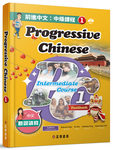
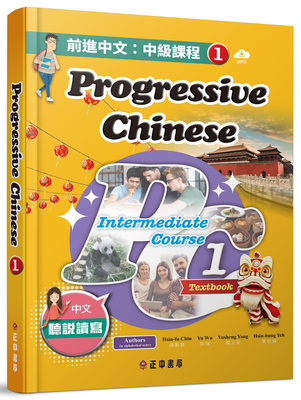
Progressive Chinese: Intermediate Course 1 (Traditional Character ed.)
Hsin-fu Chiu, Yu Wu, Yusheng Yang, and Hsin-hung (Sean) Yeh
The learning goals that center on the thematic units are set in accordance with the language proficiency levels, established by the ACTFL ˙To Comply with the pedagogical principle of backward design to establish the teaching/learning goals for the intermediate learner of Chinese ˙Integrates into its thematic contents the ACTFL-defined, three mores of language uses as well the 5C concepts ˙Assist the learner to achieve holistic progress and to cultivate specific linguistic abilities of Chinese ˙The selecting of keywords/phrases in thetextbooks is greatly in line with vocabulary levels defined by the HSK and by the TOCFL. The regional difference in language uses between the two sides of theTaiwan Strait are also meticulously annotated in the textbooks “Progressive Chinese: Intermediate Course” complies with the pedagogical principle of backward design to establish the teaching/learning goals for the intermediate learner of Chinese. Through various forms of formative and summative assessment, every lesson and every thematic unit constantly provides the learner with chances to re-consolidate their developing Chinese proficiency. As standardized ways of ensuring successful learning, “Progressive Chinese” integrates into its thematic contents the ACTFL-defined, three mores of language uses as well the 5C concepts. In addition to the overall progress in Chinese, it attempts to cultivate the following specific linguistic abilities of Chinese: 1. To ask questions, to answer questions, to deal with simple social transactions, (forthe high potential learner) to narrate, to compare, and to describe. 2. To process and to produce Chinese texts in paragraphs. 3. To develop strategies to comprehend audio and textual input: to put up with unfamiliar language units, to skim through materials, to infer information from co-texts. 4. To develop and apply language learning strategies to gradually become independent Chinese learners to achieve the purpose of lifelong learning.
-
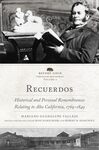
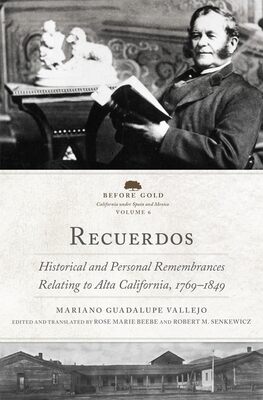
Recuerdos: Historical and Personal Remembrances Relating to Alta California, 1769–1849 (2 Volume Set)
Mariano Guadalupe Vallejo, Rose Marie Beebe, and Robert M. Senkewicz
A generation after the U.S. conquest of California, Mariano Guadalupe Vallejo set out to write the story of the land he knew so well—a history to dispel the romantic vision quickly overtaking the state’s recent past. The five-volume history he produced, published here for the first time in English translation, is the most complete account of California before the gold rush by someone who resided in California at the time.
Mariano Guadalupe Vallejo (1807–90) grew up in Spanish California, became a leading military and political figure in Mexican California, and participated in some of the founding events of U.S. California, such as the Monterey Constitutional Convention and the first legislature. With his project, undertaken for historian and publisher Hubert Howe Bancroft, Vallejo sought to correct misrepresentations of California’s past, which dismissed as insignificant the pre–gold rush Spanish and Mexican periods—conflated into one “Mission era.”
Instead, Vallejo’s history emphasized the role of the military in the Spanish colonization of California and argued that the missionaries after Junípero Serra, with their medieval ideas, had actually retarded the development of California until secularization in the early 1830s. Culture, he contended, was of intense interest to the Californio people, as was the education of children. His accounts of Indigenous peoples, while often sympathetic, were also characteristic of his time: he and other California military leaders, Vallejo maintained, had successfully subdued “hostile” Indians and established mutually beneficial relationships with others.
Out of keeping with Bancroft’s American triumphalism, Vallejo’s monumental project was consigned to the archives. With their deft translation and commentary, Rose Marie Beebe and Robert M. Senkewicz—authors of a companion volume on Vallejo’s work—have brought to light a remarkable perspective, often firsthand, on important events in early California history. Their efforts restore a critical chapter to the story of California and the American West.
-
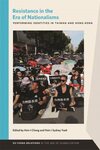
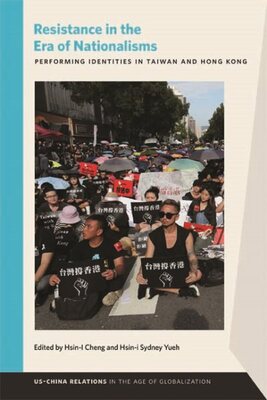
Resistance in the Era of Nationalisms: Performing Identities in Taiwan and Hong Kong
Hsin-I Cheng and Hsin-i Sydney Yueh
The desire of the people of Taiwan and Hong Kong to exercise democratic self-rule, fully embody their local identities, and become global citizens challenges the big-power politics between China and the United States. Occupying a critical stance on the margins, the local perspectives and international relations of these two cosmopolitan and postcolonial societies challenge both narratives centered on China and those focused on the U.S.–China power struggle. Taking a culture-centered approach to the communicative process of “glocalized resistance” in an era of rising nationalisms, the chapters in this volume address topics ranging from the rhetoric of political leaders and the language games of mass protesters on social media to resistant street performance. These chapters showcase the geocultural identity-in-the-making of the Taiwanese and Hong Kong people and offer insights into societies under imminent threat by an aggressive neighbor.
-
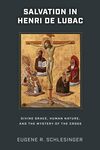
Salvation in Henri de Lubac: Divine Grace, Human Nature, and the Mystery of the Cross
Eugene R. Schlesinger
This study provides a compelling account of the major works of Henri de Lubac, one of the most influential theologians of the twentieth century, and argues that soteriology provides a lens through which their inner unity can be discerned.
The writings of Henri de Lubac have left an indelible mark on Catholic theology, preparing the ground for, giving shape to, and explaining the seminal event of twentieth-century Catholicism: the Second Vatican Council. Like the Council itself, though, de Lubac remains a contested figure, difficult to classify.
Salvation in Henri de Lubac presents an overview of de Lubac’s major works in light of his own statements that a mystical vision animated them all. De Lubac’s mystical theology hinges upon a vision of salvation, understood as humanity’s incorporation into the triune God through the cross and resurrection of the incarnate Christ. From his writings on the supernatural and theological epistemology, to his treatments of the spiritual interpretation of Scripture, ecclesiology, sacramental theology, and the theology of history, the mystery of the cross looms large, gathering these disparate topics into one focal center while also allowing their distinct contours to remain. By attending to de Lubac’s work in this light, Eugene R. Schlesinger brings important themes from French language scholarship into the English-speaking conversation and clarifies the nature of de Lubac’s ressourcement. It is not a method, nor a sensibility, but the outgrowth of a conviction: in the mystery of Christ a definitive and unsurpassable gift has been given, one that constitutes the meaning of the world and its history, one whose riches can never be exhausted. Schlesinger claims that unless we understand de Lubac and his work in light of his own motivations and emphases, we risk distorting his contribution, reducing him to a proxy in the struggle for post-conciliar Catholic self-definition.
-
The Behavioral Economics and Politics of Global Warming: Unsettling Behaviors
Hersh M. Shefrin
The main goal of this Element is to provide a psychological explanation for why actual global climate policy is so greatly at odds with the prescriptions of most neoclassical economists. To be sure, the behavioral approach does focus on why neoclassical models are often psychologically unrealistic. However, in this Element the author argues that the unrealistic elements are minor compared to the psychological pitfalls driving politically determined climate policy. Why this is the case is what the author describes as the 'big behavioral question.' More precisely, the big behavioral question asks about unsettling behaviors, why there is a huge gap between actual policy and even the weakest of the prescriptions in the range of plausible recommendations coming from neoclassical economists' integrated assessment models.
-
The Buddhist tantras : a guide
David B. Gray
The tantric Buddhist traditions emerged in India beginning in the seventh century CE and flourished there until the demise of Buddhism in India circa the fifteenth century. These traditions were disseminated to Central, East, and Southeast Asia, and continue to be practiced, most notably in Nepal, Tibet and Japan, as well as in the numerous Tibetan traditions disseminated around the world by Tibetan masters living in diaspora. The central scriptures for these traditions were generally designated by the term tantra. Tantras are works that purport to relate secret teachings of the buddhas that enable awakening in as short as one lifetime. As such they are understood by their advocates to be the inspired speech of a buddha, and hence worthy of inclusion in the canons of Buddhist traditions.
Over the past twenty years there has been considerable growth in the study of tantras as well as translations of these works into Western languages. This volume provides a detailed introduction to the Buddhist tantras. It addresses their development in India, their dissemination to Central, East and Southeast Asia, and their reception in these contexts. It introduces the key teachings in the tantras, as well as the history of their interpretation, and their connection to traditions of ritual, and contemplative practices.
It also introduces the classification of the tantras and their place in Buddhist scriptural canons. It concludes with a look at the transgressive rhetoric that characterizes many of the tantras, the impact this had on their dissemination and translation, and the ways in which Buddhists explained this. It suggests that transgressive rhetoric and practices served an important role in Buddhist tantric traditions, which may be why they persist despite the challenges they have presented to the dissemination of these traditions.
-
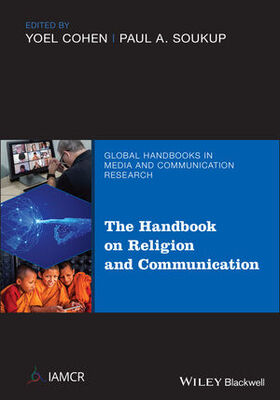
The Handbook on Religion and Communication
Yoel Cohen and Paul A. Soukup
Provides a contemporary view of the intertwined relationship of communication and religion
The Handbook of Religion and Communication presents a detailed investigation of the complex interaction between media and religion, offering diverse perspectives on how both traditional and new media sources continue to impact religious belief and practice across multiple faiths around the globe. Contributions from leading international scholars address key themes such as the changing role of religious authority in the digital age, the role of media in cultural shifts away from religious institutions, and the ways modern technologies have transformed how religion is communicated and portrayed.
Divided into five parts, the Handbook opens with a state-of-the-art overview of the subject’s intellectual landscape, introducing the historical background, theoretical foundations, and major academic approaches to communication, media, and religion. Subsequent sections focus on institutional and functional perspectives, theological and cultural approaches, and new approaches in digital technologies. The essays provide insight into a wide range of topics, including religious use of media, religious identity, audience gratification, religious broadcasting, religious content in entertainment, films and religion, news reporting about religion, race and gender, the sex-religion matrix, religious crisis communication, public relations and advertising, televangelism, pastoral ministry, death and the media, online religion, future directions in religious communication, and more.
- Explores the increasing role of media in creating religious identity and communicating religious experience
- Discusses the development and evolution of the communication practices of various religious bodies
- Covers all major media sources including radio, television, film, press, digital online content, and social media platforms
- Presents key empirical research, real-world case studies, and illustrative examples throughout
- Encompasses a variety of perspectives, including individual and institutional actors, academic and theoretical areas, and different forms of communication media
- Explores media and religion in Judeo-Christian traditions, Islam, Buddhism, Hinduism, religions of Africa, Atheism, and others
The Handbook of Religion and Communication is an essential resource for scholars, academic researchers, practical theologians, seminarians, mass communication researchers, and undergraduate and graduate students taking courses on media and religion.
-
The Idea of the Church: Historical and Theological Perspectives
Frederick J. Parrella
After World War I, a German bishop described the twentieth century as the "century of the Church." In this twenty-first century, the truth of his words have resonated with both Protestants and Catholics wrestling with the meaning and mission of the Christian community. In order to comprehend the Church, one must explore its own self-understanding throughout the centuries: from its foundation in the preaching of Jesus, the Fathers of the Church, the Medieval Period, the Reformation, and the emergence of the modern and postmodern technological world of today. THE IDEA OF THE CHURCH is not Church history, but an historical sketch of how the Church defined itself in its two millennia. These self-definitions, in Augustine, Aquinas, Luther, Calvin, the medieval and modern papacy, and the twentieth century, are as diverse as its history. Popes Innocent III, Pius IX, and Francis are microcosms of different ecclesiologies. Likewise, the Protestant Church's self-understanding in the writings of Calvin and Zwingli varies significantly from that of Barth and Tillich. The Catholic Church's ecclesiology at the Council of Trent, the “perfect society,” and at the Second Vatican Council, “people of God,” are dissimilar in both style and substance. The Church has a rich tradition of theologies: of God, Jesus Christ, sin and grace, and ethics. In the "century of the Church," ecclesiology finally dominated the theological enterprise, becoming, in the words of Henri de Lubac, the "meeting place of all mysteries." This book will give this enterprise an historical context and prepare the Christian community for future self-reflection.
-
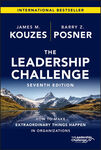
The Leadership Challenge: How to Make Extraordinary Things Happen in Organizations (7th Edition)
James M. Kouzes and Barry Z. Posner
The latest edition of the gold-standard guide for leadership development
In the new seventh edition of The Leadership Challenge: How to Make Extraordinary Things Happen in Organizations, best-selling leadership authors and business scholars James Kouzes and Barry Posner deliver an essential strategic playbook for effective leadership. The book’s actionable advice is grounded in robust research and deep insights into the complex interpersonal dynamics of the workplace.
Premier authorities in the field, the authors frame leadership as both a skill to be learned and as a relationship to be nurtured. They demonstrate how to achieve extraordinary results in the face of contemporary business challenges with engaging stories, current case studies, and straightforward frameworks for those who seek continuous, incremental improvement.
The book also offers:
- Incisive commentary on the shift toward team-oriented and hybrid work relationships
- Key insights into how to break through a new and pervasive level of cynicism amongst the modern workforce
- Strategies for leveraging the electronic global village to deliver better results within your team, in your department, and across your organization
Perfect for every practicing and aspiring leader who wants to stay current, relevant, and effective in a rapidly evolving business environment, The Leadership Challenge will help you remain impactful and capable of inspiring and motivating your constituents at every level.
-
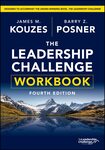
The Leadership Challenge Workbook (4th Edition)
James M. Kouzes and Barry Z. Posner
A field manual for the gold standard in leadership development books
The world’s best leaders consciously reflect on their own behaviors and choices in an effort to continuously better themselves.
In the thoroughly revised and updated Fourth Edition of The Leadership Challenge Workbook, renowned leadership educators James M. Kouzes and Barry Z. Posner deliver their latest update to one of the world’s bestselling works on leading others in organizational settings. You’ll find practical guidance on how to apply the insights from The Leadership Challenge to your daily life, as well as hands-on tips for communicating your vision, strengthening workplace commitment, building employee trust, and maintaining worker satisfaction.
Based on the insights of the Seventh Edition of James Kouzes and Barry Posner’s The Leadership Challenge, the hands-on experience of the Workbook engages you to examine and improve your ability to put into action The Five Practices of Exemplary Leadership®. The revised Fourth Edition of The Leadership Challenge Workbook will help leaders in every organization to make extraordinary things happen.
-
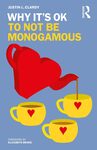
Why It's OK to Not Be Monogamous
Justin L. Clardy
The downsides of monogamy are felt by most people engaged in long-term relationships, including restrictions on self-discovery, limits on friendship, sexual boredom, and a circumscribed understanding of intimacy. Yet, a "happily ever after" monogamy is assumed to be the ideal form of romantic love in many modern societies: a relationship that is morally ideal and will bring the most happiness to its two partners.
In Why It’s OK to Not Be Monogamous, Justin L. Clardy deeply questions these assumptions. He rejects the claim that non-monogamy among honest, informed and consenting adults is morally impermissible. He shows instead how polyamorous relationships can actually be exemplars of moral virtue. The book discusses how social and political forces sustain and reward monogamous relationships. The book defines non-monogamy as a privative concept; a negation of monogamy. Looking at its prevalence in the United States, the book explains how common criticisms of non-monogamy come up short. Clardy argues, as some researchers have recently shown―monogamy relies on continually demonizing non-monogamy to sustain its moral status. Finally, the book concludes with a focus on equality, asking what justice for polyamorous individuals might look like.
-
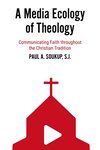
A Media Ecology of Theology: Communicating Faith Throughout the Christian Tradition
Paul A. Soukup
In the Christian tradition, the faithful do theology―defined in Anselm’s phrase as "faith seeking understanding"―in different media. The contemporary emphasis on written or academic theology obscures the long history in which people sought to understand and express their faith by way of various outlets and formats. Because historical Christianity has embraced every communication medium, the media ecology approach to communication study offers a powerful tool to examine that history and the affordances of the media for theological expression. Just so, the history of theology offers a variety of test cases to illustrate media ecology at work.
In A Media Ecology of Theology Paul Soukup invites us to explore the interaction between communication media, broadly defined, and the Christian theological heritage. Soukup follows a media ecology methodology, moving from a description of a communication medium to an examination of its affordances to a discussion of how those affordances shape the faith-seeking-understanding practiced in each. He shows that, in some cases, different media support different theological conclusions, and different theological stances shape media. The case studies range from the first to the twenty-first centuries, with a limitation imposed by selection, language, and culture.
As an introductory work, A Media Ecology of Theology addresses communication scholars and students, theological scholars and students (primarily those interested in the history of theology or in practical theology), and those with an interest in various media (art, architecture, etc.). With an interdisciplinary focus and a willingness to argue for a wider theological ecosystem―one in which the medium influences both content and selection of ideas―Soukup creates new vistas for understanding the life of faith, and how societies and communities express their most cherished ideas.
-
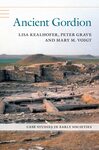
Ancient Gordion
Lisa Kealhofer, Peter Grave, and Mary M. Voigt
Ancient Gordion has long been recognized as a key Iron Age site for Anatolia and the eastern Mediterranean. Archaeological research has revealed much about its sequence of occupation. However, as yet no study has explored the underlying drivers of political and economic change at this site. This volume presents an overview of the political and economic histories supporting emergent elites and how they constructed power at Gordion during the Iron Age (1200-300 BCE). Based on geochemical and typological analysis of nearly 2000 Late Bronze Age to Hellenistic ceramic samples, the volume contextualizes this primary dataset through the lens of ceramic production, consumption, exchange and emulation. Synthesizing site data sets, the volume more broadly contributes to our understanding of the pivotal role of groups and their economic, social, and ritual practices in the creation of complex societies.
-
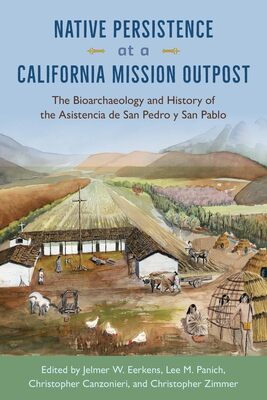
Archaeologies of Indigenous Presence
Tsim D. Schneider and Lee M. Panich
Highlighting collaborative archaeological research that centers the enduring histories of Native peoples in North America
Challenging narratives of Indigenous cultural loss and disappearance that are still prevalent in the archaeological study of colonization, this book highlights collaborative research and efforts to center the enduring histories of Native peoples in North America through case studies from several regions across the continent.
The contributors to this volume, including Indigenous scholars and Tribal resource managers, examine different ways that archaeologists can center long-term Indigenous presence in the practices of fieldwork, laboratory analysis, scholarly communication, and public interpretation. These conversations range from ways to reframe colonial encounters in light of Indigenous persistence to the practicalities of identifying poorly documented sites dating to the late nineteenth century.
In recognizing Indigenous presence in the centuries after 1492, this volume counters continued patterns of unknowing in archaeology and offers new perspectives on decolonizing the field. These essays show how this approach can help expose silenced histories, modeling research practices that acknowledge Tribes as living entities with their own rights, interests, and epistemologies.
-
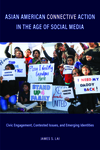
Asian American Connective Action in the Age of Social Media: Civic Engagement, Contested Issues, and Emerging Identities
James Lai
Social media provides ethno-racial immigrant groups—especially those who cannot vote due to factors such as lack of citizenship and limited English proficiency—the ability to mobilize and connect around collective issues. Online spaces and discussion forums have encouraged many Asian Americans to participate in public policy debates and take action on social justice issues. This form of digital group activism serves as an adaptive political empowerment strategy for the fastest-growing and largest foreign-born population in America. Asian American Connective Action in the Age of Social Media illuminates how associating online can facilitate and amplify traditional forms of political action.
James Lai provides diverse case studies on contentious topics ranging from affirmative action debates to textbook controversies to emphasize the complexities, limitations, and challenges of connective action that is relevant to all racial groups. Using a detailed multi-methods approach that includes national survey data and Twitter hashtag analysis, he shows how traditional immigrants, older participants, and younger generations create online consensus and mobilize offline to foment political change. In doing so, Lai provides a nuanced glimpse into the multiple ways connective action takes shape within the Asian American community.
-
Bengal Tiger, Celtic Tiger: Governing the Empire. Sir Antony MacDonnell, the Raj, and Irish Home Rule
Michael L. Brillman
This new work offers significant insights into the governance of the British Raj, and the development of Irish home rule – in all of which Sir Antony Patrick MacDonnell played major roles. / “You are about to leave India,” George Curzon, the Viceroy of British India, told Sir Antony Patrick MacDonnell in 1901 at the end of a long career, “with a record―unprecedented at the present moment―and equal to the most illustrious of Indian administrators in the past.” Curzon was not alone in his estimation of MacDonnell as the most eminent and accomplished of late-Victorian civil servants in India. / What was even more extraordinary was that even though the Viceroy's encomium in 1901 was written after MacDonnell had been a member of the Indian Civil Service (ICS) for some thirty-six years, he was about to embark upon a second distinguished administrative career as Under Secretary for Ireland. / A Roman Catholic from County Mayo, an eventual Home Ruler, and a Gladstonian Liberal, MacDonnell rose to the upper echelons of the Indian and Irish Civil Services. MacDonnell, perhaps in part because of his Irish nationality, was known throughout his Indian career as a staunch champion of the ryot class, India's peasantry. His attention to detail and tremendous energy rendered MacDonnell a leading authority on tenant right and famine relief. / He served as administrative chief of four provinces in India. Yet it was in Ireland that MacDonnell's attempts at major land reform were realized in the Irish Land Act of 1903. Several failed schemes to erect a Catholic university and a scuttled Irish Council Bill, however, led to MacDonnell's resignation in 1908, and in the same year he received an Irish peerage as Baron Swinford. / This unique and original biography not only examines Sir Antony MacDonnell within the context of British imperial administration of India and Ireland in the late-nineteenth and early-twentieth centuries, but also considers the ambivalence and preoccupations of a very significant Irish imperialist, who possessed equally as many friends as enemies.
-
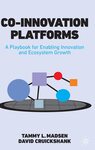
Co-innovation Platforms: A Playbook for Enabling Innovation and Ecosystem Growth
Tammy L. Madsen and David Cruickshank
Strategies and practices for growing ecosystems are increasingly important in shaping industries and markets. Sustaining productive innovation is not just about you. It depends on others as well as your willingness and ability to collaborate effectively. This book is about how to use, as well as develop, a co-innovation platform to accelerate innovation and sustain ecosystem growth. It will show how you, your team and your organization can create and foster collaborative innovation among a diverse set of organizations that are located outside of your company’s hierarchy.
A co-innovation platform provides an environment where firms can combine or recombine ideas to generate novel solutions. A distinctive feature of the co-innovation platform is its resource-open and hands-on approach to innovation. For many organizations, resource limitations, organizational obstacles and/or time constraints kill an idea before it takes shape. By providing access to demand-side and supply-side resources and capabilities to facilitate co-innovation, the platform solves this problem and shapes the ecosystem’s innovation trajectory from the ground up. This book provides strategic and practical guidance for orchestrating collaborative problem solving and ecosystem growth.
-
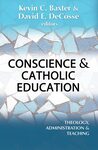
Conscience and Catholic education : theology, administration, and teaching
Kevin C. Baxter and David E. DeCosse
Leading ethicists and theologians address “Conscience” insofar as this central issue in Catholic theology relates to issues in Catholic education—religious freedom, the challenge of diversity, academic freedom, conscience formation and neuroscience and more. Like our 2017 volume Conscience and Catholic Health Care, this volume brings sharper focus to one particular area where Catholic notions of conscience and fidelity to contemporary interpretations of Church teaching are in constant dialogue.
-

Created Freedom under the Sign of the Cross: A Catholic Public Theology for the United States
David E. DeCosse
The United States is in a crisis of freedom. Influenced by neoliberal economics, the concept of freedom has become identified with an abstract, radical individualism disdainful of responsibility to others and to the past. Signs of this crisis crop up everywhere. Some invoke freedom as justification for refusing to wear a mask in a pandemic. Others argue that freedom is an empty word if it’s celebrated apart from an honest engagement with the country’s history of racism.
Created Freedom under the Sign of the Cross offers a Catholic theological response to this crisis of freedom. Catholic social ethics may be better known for its emphasis on social principles like the common good and solidarity. But developments in Catholic theologies of freedom in the last decades provide fertile ground from which to develop a bold, creative response to this American crisis of freedom.
In this book, theologian David DeCosse draws on thinkers ranging from philosopher Amartya Sen to Black Catholic theologian Shawn Copeland to twentieth-century theological giant Karl Rahner in order to reimagine American freedom in light of classic Catholic emphases on embodiment, relationship, history, the good, and God. The result is a Catholic public theology that provides a redemptive path forward in an age of crisis. -

Emergent Converging Technologies and Biomedical Systems: Select Proceedings of ETBS 2021.
N. Marriwala, C. C. Tripathi, Shruti Jain, and Shivakumar Mathapathi
Contains peer-reviewed proceedings of ETBS 2021
Discusses wireless multimedia networks, electric vehicles, biomedical signal processing and instrumentation
Serves as a useful guide for researchers involved in healthcare technologies
-
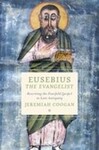
Eusebius the Evangelist: Rewriting the Fourfold Gospel in Late Antiquity
Jeremiah Coogan
Eusebius the Evangelist analyzes Eusebius of Caesarea’s fourth-century reconfiguration of the Gospels as a window into broader questions of technology and textuality in the ancient Mediterranean. The four Gospels of the New Testament (Matthew, Mark, Luke, John) share language, narratives, and ideas, yet they also differ in structure and detail. The sophisticated system through which Eusebius organized this intricate web of textual relationships is known as the Eusebian apparatus.
Eusebius’ editorial intervention—involving tables, sectioning, and tables of contents—participates in a broader late ancient transformation in reading and knowledge. To illuminate Eusebius’ innovative use of textual technologies, the study juxtaposes diverse ancient disciplines—including chronography, astronomy, geography, medicine, philosophy, and textual criticism—with a wide range of early Christian sources, attending to neglected evidence from material texts and technical literature. These varied phenomena reveal how Eusebius’ fourfold Gospel worked in the hands of readers.
Eusebius’ creative juxtapositions of Gospel material had an enduring impact on Gospel reading. Not only did Eusebius continue earlier trajectories of Gospel writing, but his apparatus continued to generate new possibilities in the hands of readers. For more than a millennium, in more than a dozen languages and in thousands of manuscripts, Eusebius’ invention transformed readers’ encounters with Gospel text on the page. By employing emerging textual technologies, Eusebius created new possibilities of reading, thereby rewriting the fourfold Gospel in a significant and durable way.
-

Is the International Legal Order Unraveling?
David L. Sloss
This book grows out of the work of a study group convened by the American Branch of the International Law Association. The group had a mandate to examine threats to the rules-based international order and possible responses. The several chapters in the book-all of which are written by distinguished international law scholars--generally support the conclusion that the rules-based international order confronts significant challenges, but it is not unraveling--at least, not yet. Climate change is the biggest wild card in trying to predict the future. If the world's major powers--especially the United States and China--cooperate with each other to combat climate change, then other threats to the rules-based order should be manageable. If the world's major powers fail to address the climate crisis by 2040 or 2050, the other threats addressed in this volume may come to be seen as trivial in comparison.
The book consists of fourteen chapters, plus an introduction. Three chapters address specific threats to the rules-based international order: climate change, autonomous weapons, and cyber weapons. Eight chapters address particular substantive areas of international law: jus ad bellum, jus in bello, trade law, investment law, anti-bribery law, human rights law, international criminal law, and migration law. The remaining chapters provide a range of perspectives on the past evolution and likely future development of the rules-based international order as a whole.