
Other notable published work is also included in this gallery.
This gallery includes books published in 1974, 1975, 1976, 1977, 1979, 1982, 1983, 1984, 1985, 1986, 1987, 1989, 1990, 1991, 1992, 1993, 1994, 1995, 1996, 1997, 1998, 1999, 2000, 2001, 2002, 2003, 2004, 2005, 2006, 2007, 2008, 2009, 2010, 2011, 2012, 2013, 2014, 2015, 2016, 2017, 2018, 2019, 2020, 2021, 2022, 2023, 2024, 2025, and 2026.
-
Dear Beast Loveliness
Timothy Myers
Dear Beast Loveliness explores the riches of that most fundamental of human experiences: having a body. Some of the richest paradoxes we know are those involving that most fundamental of human experiences: having a body. On one hand, we all know it with absolute intimacy; on the other, our perceptions and values vary astonishingly. Then there’s the ancient drama of fulfilling bodily needs and urges, with the concomitant struggle in how we think and feel about such things.
-
Equipment Management in the Post-Maintenance Era: A New Alternative to Total Productive Maintenance (TPM)
Kern Peng
Recent advancements in information systems and computer technology have led to developments in equipment and robotic technology that have permanently changed the characteristics of manufacturing equipment. Equipment Management in the Post-Maintenance Era: A New Alternative to Total Productive Maintenance (TPM) introduces a new way of thinking to help high-tech organizations manage an increasingly complex equipment base. It also facilitates the fundamental understanding of equipment management those in traditional industries will need to prepare for the emerging microchip era in equipment.
Kern Peng shares insights gained through decades of managing equipment performance. Using a systems model to analyze equipment management, he introduces alternatives in equipment management that are currently gaining momentum in high-tech industries. The book highlights the fundamental internal flaw in maintenance organizational setup, presents new approaches to replace maintenance functional setup, and illustrates a time-tested transformation and implementation process to help transition your organization from the maintenance era to the new post-maintenance era.
-
Finding Meaning, Facing Fears: In the Autumn of Your Years (45- 65)
Jerrold Shapiro
Autumn is a time of bright colors and full harvest moons; a time to reap and savor what we’ve sown. Our autumn years are the ideal time to reexamine our lives. Often spurred on by a 50th birthday or the last child leaving home, it becomes important to question who we are in the larger scheme of things, to wonder what we really want from our lives. Finding Meaning, Facing Fears invites us to explore the many opportunities this time of life presents: opportunities to stretch in our capacities, to face and conquer old demons, and to meet new challenges with greater resources than were available to us before.
Dr. Shapiro helps us discover which alternatives will serve best in our relationships, career, even spiritual quests, and offers answers to the inevitable questions we face as we get older, such as: “Is that all there is?” “Is it too late to change my life?” “Where do I go from here?” and, “I’ve got everything I thought I wanted; why aren’t I happy?”
-
Fundamentals of Embedded Software: with the ARM Cortex-M3, 2nd edition
Daniel W. Lewis
For sophomore-level courses in Assembly Language Programming in Computer Science, Embedded Systems Design, Real-Time Analysis, Computer Engineering, or Electrical Engineering curricula. Requires prior knowledge of C, C++, or Java. This text is useful for Computer Scientists, Computer Engineers, and Electrical Engineers involved with embedded software applications.
This book is intended to provide a highly motivating context in which to learn procedural programming languages. The ultimate goal of this text is to lay a foundation that supports the multi-threaded style of programming and high-reliability requirements of embedded software. It presents assembly the way it is most commonly used in practice - to implement small, fast, or special-purpose routines called from a main program written in a high-level language such as C. Students not only learn that assembly still has an important role to play, but their discovery of multi-threaded programming, preemptive and non-preemptive systems, shared resources, and scheduling helps sustain their interest, feeds their curiosity, and strengthens their preparation for subsequent courses on operating systems, real-time systems, networking, and microprocessor-based design.
-
Glad to Be Dad: A Call to Fatherhood
Timothy Myers
After staying home with his two sons for a year and his daughter since her infancy, Tim Myers knows all about being a stay-at-home parent. He knows the most effective cleaning products, which snacks to buy, and has developed a “housemaid’s knee.” He has experienced first-hand the profound influence fathers have on their children, along with the challenges of being a committed parent. By recounting personal experiences, offering honest, sincere opinions, and including quizzes for fatherly-preparedness, Tim Myers emphasizes the importance of fatherly contribution and influence in the home. He shows fathers that they are not only vital to home life, but that fatherhood also brings great joy into men’s lives, not to mention a surprising amount of plain old fun. In addition, Myers details the essential role of fathers, and the very real (and sometimes frustrating) transition into taking an active role in home life. Poignant, funny, and inspiring, Glad to be Dad is perfect for both aspiring fathers and seasoned veterans.
-
Global Perspectives on Italian Literature, Cinema, and Culture
Tonia Riviello
Through ten major essays by scholars of Italian, of different experiences, it offers a prospective framework of analysis methodologies and proposals for critical interpretations of classic and modern texts of the Italian literary scene, from Boiardo and Ariosto to Calvin, Manganelli and M. Venezia, via Mazzini and Pirandello, beds in international perspective and with an eye to the new muse, cinema (Rossellini, Fellini and Moretti), as shown by the history of each author, all teachers of universities in America, Canada, Italy, and Switzerland: Jo Ann Cavallo, Remo Ceserani, Anthony Verna, Gaetano Cipolla, Laura Benedetti, Millicent Marcus, Tatiana Crivelli, Giuseppe Mazzotta, Tonia Catherine Riviello.
-
Identity Poetics: Race, Class, and the Lesbian-Feminist Roots of Queer Theory
Linda Garber
"Queer theory," asserts Linda Garber, "alternately buries and vilifies lesbian feminism, missing its valuable insights and ignoring its rich contributions." Rejecting the either/or choice between lesbianism and queer theory, she favors an inclusive approach that defies current factionalism. In an eloquent challenge to the privileging of queer theory in the academy, Garber calls for recognition of the historical—and intellectually significant—role of lesbian poets as theorists of lesbian identity and activism.
The connections, Garber shows, are most clearly seen when looking at the pivotal work of working-class lesbians/lesbians of color whose articulations of multiple, simultaneous identity positions and activist politics both belong to lesbian feminism and presage queer theory. Identity Poetics includes a critical overview of recent historical writing about the women's and lesbian-feminist movements of the 1970s; discussions of the works of Judy Grahn, Pat Parker, Audre Lorde, Adrienne Rich, and Gloria Anzaldúa; and, finally, a chapter on the rise and hegemony of queer theory within lesbigay studies. -
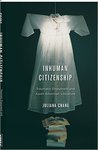
Inhuman Citizenship: Traumatic Enjoyment and Asian American Literature
Juliana Chang
In Inhuman Citizenship, Juliana Chang claims that literary representations of Asian American domesticity may be understood as symptoms of America’s relationship to its national fantasies and to the “jouissance” that both overhangs and underlies those fantasies. Chang shows that by identifying with the nation’s psychic disturbance, Asian American characters ethically assume responsibility for a national unconscious that is often disclaimed.
To examine her argument that racism ascribes too much, rather than a lack of, humanity, Chang analyzes domestic accounts by Asian American writers, including Fae Myenne Ng’s Bone, Brian Ascalon Roley’s American Son, Chang-rae Lee’s Native Speaker, and Suki Kim’s The Interpreter. Employing careful reading and Lacanian psychoanalysis, Chang finds sites of excess and shock: they are not just narratives of trauma, but they produce trauma as well. They render Asian Americans as not only the objects but also the vehicles and agents of inhuman suffering. And, claims Chang, these novels disturb yet strangely exhilarate the reader through characters who are objects of racism and yet inhumanly enjoy their suffering and the suffering of others.
Through a detailed investigation of “family business” in literature depicting Asian American life, Chang shows that by identifying with the nation’s psychic disturbance, Asian American characters ethically assume responsibility for a national unconscious that is all too often disclaimed.
-
Knowledge for Love: Franciscan Science as the Pursuit of Wisdom
Keith Douglass Warner
This essay extends the retrieval of the Franciscan intellectual tradition into the sciences by presenting the vocation and work of three Franciscan scientists. Friar Bartholomew the Englishman taught his fellow Franciscans with the best available scientific knowledge to prepare them for preaching in foreign lands. Friar Roger Bacon conducted research into the natural world to advance scientific knowledge in service of the Church. Friar Bernardino de Sahagún investigated the life, worldview and culture of the Aztec peoples in New Spain (now Mexico) to interpret these for his fellow Franciscans. In the Franciscan tradition, learning about nature helps one grow in wisdom, and thus Franciscan science is knowledge for love. This essay argues that the retrieval of our Franciscan intellectual tradition could and should include the sciences. This is the eighth in a series intended to encompass topics which will connect the Franciscan Intellectual Tradition with today s language of our Christian Catholic Franciscan way of Gospel Life. Previous volumes have presented an overview of the tradition,discussed dimensions of creation and Christian anthropology in Franciscan theology, and illustrated them through an iconographic tradition found in the Gospel of John.
-
Monkey Wisdom and Other Stories
Sukhmander Singh
During my teaching career for 25 years at Santa Clara University, I found a rather interesting yet engaging way to make a point to my students. I would pause and tell a story with animal actors, especially a monkey among them. These stories are short but full of wit and wisdom to help students develop good study habits and to become successful in their careers. Not all of them are my original stories. Although some of them are made from my imagination, others have been adapted from folk tales and have been given a little bit of a spin to bring out a moral to each story.
-
Network-Embedded Management and Applications - Understanding Programmable Networking Infrastructure
Alexander Clemm and Ralf Wolter
Despite the explosion of networking services and applications in the past decades, the basic technological underpinnings of the Internet have remained largely unchanged. At its heart are special-purpose appliances that connect us to the digital world, commonly known as switches and routers. Now, however, the traditional framework is being increasingly challenged by new methods that are jostling for a position in the “next-generation” Internet. The concept of a network that is becoming more programmable is one of the aspects that are taking center stage. This opens new possibilities to embed software applications inside the network itself and to manage networks and communications services with unprecedented ease and efficiency.
In this edited volume, distinguished experts take the reader on a tour of different facets of programmable network infrastructure and applications that exploit it. Presenting the state of the art in network embedded management and applications and programmable network infrastructure, the book conveys fundamental concepts and provides a glimpse into various facets of the latest technology in the field.
-
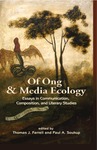
Of Ong and Media Ecology: Essays in Communication, Composition, and Literary Studies
Thomas J. Farrell and Paul A. Soukup
Each of the essays in this collection builds on the scholarship or ideas of Walter J. Ong, S.J., and, in so doing, suggests fruitful avenues of exploration for contemporary scholars. Taken as a whole, these essays call attention to human expression and expressiveness—orality, writing, print, decoration: the whole variety of human communication. Grounded is disciplines ranging from anthropology to literature, the essays both show the increasing value of Ong’s thought and the wonderful contribution it makes to understanding human life.
-
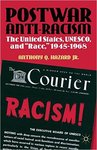
Postwar Anti-racism: The United States, UNESCO, and "Race," 1945-1968
Anthony Q. Hazard
This book explores the discourse and practice of anti-racism in the first two decades following World War II, uncovering the ways scientific and cultural discourses of 'race' continued to circulate in the early period of contemporary globalization through the lens on UNESCO.
-
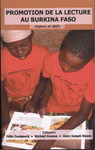
Promotion de la lecture au Burkina Faso. Enjeux et défis
Félix Compaoré, Michael J. Kevane, and Alain Joseph Sissao
La question de la lecture occupe une place centrale dans le processus de développement de toutes les sociétés modernes. Ce livre vient combler un vide intellectuel, car il permet de montrer les vrais problèmes liés à la lecture au Burkina Faso.
Les éditeurs Michael Kevane, Alain Joseph Sissao et Félix Compaoré ont essayé de se pencher, de façon scientifique, sur la question de la lecture en menant des enquêtes quantitatives et qualitatives dans les zones rurales mais aussi urbaines du Burkina Faso afin de cerner de plus près les habitudes réelles de lecture chez les élèves. Ils ont aussi essayé de faire de la corrélation entre la lecture et l’implantation des bibliothèques.
Les résultats des recherches dans ce volume aboutissent de manière persistante au fait que la fréquentation de la bibliothèque a un impact important au niveau de l’acquisition permanente du savoir.
Cet ouvrage vient donc à point nommé pour rappeler que comme les sociétés développées, la connaissance s’acquiert dans le système éducatif moderne désormais par la lecture.
« Promotion de la lecture au Burkina Faso est l’ouvrage au titre très évocateur qui couronne les réflexions savamment menées par ce collectif d’auteurs afin de cerner les enjeux et les défis de la lecture au Burkina Faso. »
-
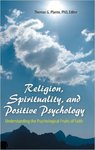
Religion Spirituality and Positive Psychology: Understanding the Psychological Fruits of Faith
Thomas G. Plante
In recent years, scholars from an array of disciplines applied cutting-edge research techniques to determining the effects of faith.Religion, Spirituality, and Positive Psychology: Understanding the Psychological Fruits of Faith brings those scholars together to share what they learned. Through their thoughtful, evidence-based reflections, this insightful book demonstrates the positive benefits of spiritual and religious engagement, both for individual practitioners and for society as a whole.
The book covers Buddhism, Christianity, Islam, Judaism and other major traditions across culture in two sections. The first focuses on ways in which religious and spiritual engagement improves psychological and behavioral health. The second highlights the application of this knowledge to physical, psychological, and social problems. Each chapter focuses on a spiritual "fruit," among them humility, hope, tolerance, gratitude, forgiveness, better health, and recovery from disease or addiction, explaining how the fruit is "planted" and why faith helps it flourish. -
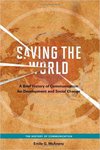
Saving the World: A Brief History of Communication for Development and Social Change
Emile G. McAnany
This far-reaching and long overdue chronicle of communication for development from a leading scholar in the field presents in-depth policy analyses to outline a vision for how communication technologies can impact social change and improve human lives. Drawing on the pioneering works of Daniel Lerner, Everett Rogers, and Wilbur Schramm as well as his own personal experiences in the field, Emile G. McAnany builds a new, historically cognizant paradigm for the future that supplements technology with social entrepreneurship. McAnany summarizes the history of the field of communication for development and social change from Truman's Marshall Plan for the Third World to the United Nations' Millennium Development Goals. Part history and part policy analysis, Saving the World argues that the communication field can renew its role in development by recognizing large aid-giving institutions have a difficult time promoting genuine transformation. McAnany suggests an agenda for improving and strengthening the work of academics, policy makers, development funders, and any others who use communication in all of its forms to foster social change.
-
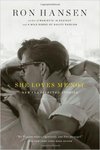
She Loves Me Not: New and Selected Stories
Ron Hansen
In this new volume, comprising twelve new stories and seven pieces selected from Nebraska, the subjects of Hansen’s scrutiny range from Oscar Wilde to murder to dementia to romance, and display Hansen at his storytelling best: the craftsman described as “part Hemingway and part García Márquez . . . an all-American magic realist in other words, a fabulist in the native grain.” Readers will thrill to Hansen’s masterful attention to the smallest and most telling details, even as he plunges straight into the deepest recesses of desire, love, fury, and loss. Magisterial in its scope and surprising in its variety, She Loves Me Not shows an author at the height of his powers and confirms Hansen’s place as a major American writer.
-
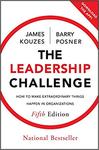
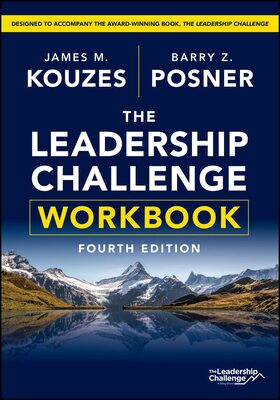
The Leadership Challenge: How to Make Extraordinary Things Happen in Organizations (5th ed.)
James M. Kouzes and Barry Z. Posner
The 25th anniversary edition of the bestselling business classic, completely revised and updated
For more than 25 years, The Leadership Challenge has been the most trusted source on becoming a better leader, selling more than 2 million copies in over 20 languages since its first publication. Based on Kouzes and Posner's extensive research, this all-new edition casts their enduring work in context for today's world, proving how leadership is a relationship that must be nurtured, and most importantly, that it can be learned.
Features over 100 all-new case studies and examples, which show The Five Practices of Exemplary Leadership in action around the world
Focuses on the toughest organizational challenges leaders face today
Addresses changes in how people work and what people want from their work
An indispensable resource for leaders at all levels, this anniversary edition is a landmark update and must-read.
-
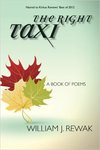
The Right Taxi
William Rewak
This poetry book is divided into three parts. The first deals largely with different types of personalities, the "ghosts" referred to in the opening quote by Shakespeare. The second part, told mostly by a first-person narrator, speaks of the joys, trials, sufferings and puzzles of life. The third part is fanciful and revolves around the fun we can have in imagining animals who have more consciousness than we give them credit for. There are these ghosts, journeys and fantasies in everyone's life. They may be fearful and adventurous, and they may also be humorous and even outlandish; they often celebrate life, they come together at our common destination, death. But if we examine all of them carefully, we usually discover that they lead us to an inner spark of reality, to the point where the mundane meets the transcendent. And there we find that the mundane has more to offer than we thought: it is a pathway to meaning. These poems find their meaning, ultimately, in a God who, in the first, flush moments of creation, raised the dust of the universe to the level of spirit.
-
The Unknowable and the Counterintuitive: The Surprising Insights of Modern Science
Aleksandar I. Zecevic
Although classical physics provides fairly simple explanations for a wide range of phenomena, it clearly fails to describe some of the subtler workings of nature. As a result, there is widespread agreement among scientists that the Newtonian paradigm is inadequate, and must be replaced by a more sophisticated view of reality. This book examines what such an outlook might entail, and explains why we need to reevaluate some of our most deeply ingrained beliefs about the world we live in. A distinguishing feature of this book is that it combines insights from chaos theory, metamathematics, quantum mechanics, and the theory of relativity, which are seldom (if ever) united under a single title. What binds these seemingly disparate disciplines together is the recognition that each of them reveals certain counterintuitive aspects of nature, and suggests that human knowledge is inherently limited. In that respect, this book represents a natural “technical companion” to Truth, Beauty, and the Limits of Knowledge: A Path from Science to Religion (University Readers, 2012), which examines the philosophical and theological implications of modern science.
-
Truth, Beauty, and the Limits of Knowledge: A Path from Science to Religion
Aleksandar I. Zecevic
Is it rational for scientifically trained individuals to believe in God, and accept controversial theological claims such as the existence of miracles? Are science and theology essentially incompatible, or can their positions be reconciled on some level? This book addresses such questions by recasting certain key religious teachings in a language that is familiar to scientists, engineers, and mathematicians. It does so with the help of various science-based metaphors and analogies, whose primary purpose is to interpret theological claims in a way that is attuned to the spirit of our age. A crucial step in developing such “analogical bridges” between science and religion involves challenging the traditional Newtonian paradigm, which maintains that physical processes are generally deterministic and predictable (i.e., “well behaved”). A closer examination of recent scientific developments will show that this assumption is incorrect, and that certain aspects of nature will remain unknowable to us regardless of future technological advances. This realization opens the door to a meaningful conversation between science and theology, since both disciplines implicitly accept the premise that the true nature of “reality” can never be fully grasped by the human mind.
-
University Physics for the Physical and Life Sciences, vol. 1
Philip R. Kesten and David L. Tauck
Authors Philip R. Kesten and David L. Tauck take a fresh and innovative approach to the university physics (calculus-based) course. They combine their experience teaching physics (Kesten) and biology (Tauck) to create a text that engages students by using biological and medical applications and examples to illustrate key concepts.
University Physics for the Physical and Life Sciences teaches the fundamentals of introductory physics, while weaving in formative physiology, biomedical, and life science topics to help students connect physics to living systems. The authors help life science and pre-med students develop a deeper appreciation for why physics is important to their future work and daily lives. With its thorough coverage of concepts and problem-solving strategies, University Physics for the Physical and Life Sciences can also be used as a novel approach to teaching physics to engineers and scientists or for a more rigorous approach to teaching the college physics (algebra-based) course.
University Physics for the Physical and Life Sciences utilizes six key features to help students learn the principle concepts of university physics:
• A seamless blend of physics and physiology with interesting examples of physics in students’ lives,
• A strong focus on developing problem-solving skills (Set Up, Solve, and Reflect problem-solving strategy),
• Conceptual questions (Got the Concept) built into the flow of the text,
• “Estimate It!” problems that allow students to practice important estimation skills
• Special attention to common misconceptions that often plague students, and
• Detailed artwork designed to promote visual learning
-
University Physics for the Physical and Life Sciences, vol. 2
Philip R. Kesten and David L. Tauck
Authors Philip R. Kesten and David L. Tauck take a fresh and innovative approach to the university physics (calculus-based) course. They combine their experience teaching physics (Kesten) and biology (Tauck) to create a text that engages students by using biological and medical applications and examples to illustrate key concepts.
University Physics for the Physical and Life Sciences teaches the fundamentals of introductory physics, while weaving in formative physiology, biomedical, and life science topics to help students connect physics to living systems. The authors help life science and pre-med students develop a deeper appreciation for why physics is important to their future work and daily lives. With its thorough coverage of concepts and problem-solving strategies, University Physics for the Physical and Life Sciences can also be used as a novel approach to teaching physics to engineers and scientists or for a more rigorous approach to teaching the college physics (algebra-based) course. University Physics for the Physical and Life Sciences utilizes six key features to help students learn the principle concepts of university physics:
• A seamless blend of physics and physiology with interesting examples of physics in students’ lives,
• A strong focus on developing problem-solving skills (Set Up, Solve, and Reflect problem-solving strategy),
• Conceptual questions (Got the Concept) built into the flow of the text,
• “Estimate It!” problems that allow students to practice important estimation skills
• Special attention to common misconceptions that often plague students, and
• Detailed artwork designed to promote visual learning
-

A Common Glory
Penelope Duckworth
Poetry. Penelope Duckworth's first full collection of poetry, A COMMON GLORY, travels the outer landscape of the natural world exploring her roots in the farmland of southern Ohio; family place as she moved west and traveled abroad; and sacred space as she explored her spiritual heritage through study and priesthood in the Episcopal Church. Her poems also chronicle the inner landscape of grief for the deaths of her sister and father; of women's lives as she probes the stories of women in scripture, as well as touching her own occasions for joy, outrage, forgiveness, and gratitude. Working both in traditional forms and free verse, this accessible collection is a strong companion to her other writings.
-
A Companion to the Eucharist in the Middle Ages
Ian Levy, Gary Macy, and Kristen Van Ausdall
The Eucharist in the European Middle Ages was a multimedia event. First and foremost it was a drama, a pageant, a liturgy. The setting itself was impressive. Stunning artwork adorned massive buildings. Underlying and supporting the liturgy, the art and the architecture was a carefully constructed theological world of thought and belief. Popular beliefs, spilling over into the magical, celebrated that presence in several tumultuous forms. Church law regulated how far such practice might go as well as who was allowed to perform the liturgy and how and when it might be performed. This volume presents the medieval Eucharist in all its glory combining introductory essays on the liturgy, art, theology, architecture, devotion and theology.
-
A Great Leap Forward: 1930s Depression and U.S. economic growth
Alexander J. Field
This bold re-examination of the history of U.S. economic growth is built around a novel claim, that productive capacity grew dramatically across the Depression years (1929-1941) and that this advance provided the foundation for the economic and military success of the United States during the Second World War as well as for the golden age (1948-1973) that followed.
Alexander J. Field takes a fresh look at growth data and concludes that, behind a backdrop of double-digit unemployment, the 1930s actually experienced very high rates of technological and organizational innovation, fueled by the maturing of a privately funded research and development system and the government-funded build-out of the country's surface road infrastructure. This significant new volume in the Yale Series in Economic and Financial History invites new discussion of the causes and consequences of productivity growth over the last century and a half and on our current prospects.
-
APA Educational Psychology Handbook
Karen R. Harris, Steve Graham, and Tim Urdan
The APA Educational Psychology Handbook reflects the broad nature of the field today, with state-of-the-science reviews of the diverse critical theories driving research and practice; in-depth investigation of the range of individual differences and cultural/contextual factors that affect student achievement, motivation, and beliefs; and close examination of the research driving current assessment, decision making, teaching skills and content, teacher preparation, and the promotion of learning across the life span and with special populations.
Volume 1: Theories, Constructs, and Critical Issues addresses the definition of educational psychology, some of the most critical theories driving research and practice today, broad areas of research that educational psychology has addressed based on multiple theories and that make an important contribution to the field, and emerging and cutting-edge issues.
Volume 2: Individual Differences and Cultural and Contextual Factors includes 21 chapters that examine a range of individual differences, cultural factors, and contextual factors affecting student achievement, motivation, and beliefs.
Volume 3: Application to Learning and Teaching focuses on specific applications of research in educational psychology for assessment and decision making, teaching skills and content, promoting learning, and teacher preparation as well as across the life span and with special populations. -
A Wild Surge of Guilty Passion
Ron Hansen
From the acclaimed author of Atticus and Mariette in Ecstasy comes a stylish novel set in the hard-drinking, fast-living New York City of the Jazz Age that follows two lovers in a torrid affair on an arc of murder and sexual self-destruction.
Based on a real case whose lurid details scandalized Americans in 1927 and sold millions of newspapers, acclaimed novelist Ron Hansen’s latest work is a tour de force of erotic tension and looming violence. Trapped in a loveless marriage, Ruth Snyder is a voluptuous, reckless, and altogether irresistible woman who wishes not only to escape her husband but that he die—and the sooner the better. No less miserable in his own tedious marriage is Judd Gray, a dapper corset-and-brassiere salesman who travels the Northeast peddling his wares. He meets Ruth in a Manhattan diner, and soon they are conducting a white-hot affair involving hotel rooms, secret letters, clandestine travels, and above all, Ruth’s increasing insistence that Judd kill her husband. Could he do it? Would he? What follows is a thrilling exposition of a murder plan, a police investigation, the lovers’ attempt to escape prosecution, and a final reckoning for both of them that lays bare the horror and sorrow of what they have done. Dazzlingly well-written and artfully constructed, this impossible-to-put-down story marks the return of an American master known for his elegant and vivid novels that cut cleanly to the essence of the human heart, always and at once mysterious and filled with desire.