
Other notable published work is also included in this gallery.
This gallery includes books published in 1974, 1975, 1976, 1977, 1979, 1982, 1983, 1984, 1985, 1986, 1987, 1989, 1990, 1991, 1992, 1993, 1994, 1995, 1996, 1997, 1998, 1999, 2000, 2001, 2002, 2003, 2004, 2005, 2006, 2007, 2008, 2009, 2010, 2011, 2012, 2013, 2014, 2015, 2016, 2017, 2018, 2019, 2020, 2021, 2022, 2023, 2024, 2025, and 2026.
-
Innovationspotenzialanalyse für die neuen Technologien für das Verwalten und Analysieren von großen Datenmengen (Big Data Management)
Volker Markl, Alexander Löser, Thomas Hoeren, Helmut Krcmar, Holmer Hemsen, Michael Schermann, Matthias Gottlieb, Christoph Buchmüller, Philip Uecker, and Till Bitter
Durch die Digitalisierung von Wirtschaft und Gesellschaft ist ein rasantes Anwachsen von Datenbeständen zu beobachten. In fast allen Unternehmenssowie Wissenschaftsbereichen werden bereits heute schon Unmengen an Daten erzeugt, deren Größe, Erfassungsgeschwindigkeit oder Heterogenität die Fähigkeiten gängiger Datenbanksoftwareprodukte zur Verwaltung und zur Analyse übersteigt. Dieses Phänomen, welches unter dem Schlagwort „Big Data“ popularisiert wurde, stellt eine große Chance für Unternehmen, Wissenschaft und Gesellschaft dar. Allerdings ergibt sich aufgrund der neuen Komplexität der Daten und Analysen eine Vielzahl an Herausforderungen technischer, wirtschaftlicher und rechtlicher Natur. Diese Studie analysiert die Chancen und Herausforderungen von Big Data insbesondere im Hinblick auf eine nachhaltige Wettbewerbsfä- higkeit Deutschlands.
-
Jesus Risen in Our Midst: Essays on the Resurrection of Jesus in the Fourth Gospel
Sandra M. Schneiders
Jesus Risen in Our Midst mines the Resurrection Narrative of John's gospel as a rich resource for understanding and developing Christian spirituality. In this series of essays, which can be read independently of one another, Scripture scholar Sandra Schneiders draws out especially fascinating insights onthe place of the Resurrection in the overall structure of the Gospel of Johnthe important structure of John 20, which presents a series of episodes that are internally related to each other and constitute a distinctive synthesis of Christian spiritualitywhat the Resurrection story reveals about the New Covenant promised by Jeremiah and Ezekielthe anthropology and eschatology that is operative in John's account of the Resurrectionthe distinction in John between the Glorification and the Resurrection of Jesus
-
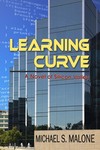
Learning Curve: A Novel of Silicon Valley
Michael S. Malone
Get an inside view of the breathless, winner-take-all world of high technology — Silicon Valley style — in this fast-paced corporate thriller.
Veteran businessman Dan Crowen is finally handed the reins of a large, successful tech firm, Validator Software — only to be ordered by its eccentric owner, Cosmo Validator, to take a step that could destroy the company.
Young entrepreneur Alison Prue is at the helm of Validator’s upstart rival, eTernity. When the venture capitalists funding eTernity decide it’s time to take the hot young startup public and go head-to-head against Validator, both Alison and Dan are caught up in a global tsunami of high-tech conspiracies.
Nothing’s as it seems in this high-stakes game of cat and mouse that will keep you guessing the whole way through.
-
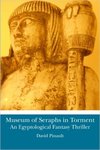
Museum of Seraphs in Torment: An Egyptological Fantasy Thriller
David Pinault
Francis Valerian Hammond: the most gifted young Egyptologist of his generation—or a crackpot so unstable that he merits his current residence in the locked ward of a psychiatric facility? Scrawled writings from his cell hint at a lost treasure known as King Solomon’s Wand—an artifact that Hammond claims somehow links the Egyptian prince Khaemwaset, son of pharaoh Ramses the Great, with otherworldly visitors called the Seraphs. Despised and isolated, Hammond finds his claims laughed off by all his onetime academic colleagues—all except his old friend Ricky Atlas, a grad-school dropout and Egyptological ne’er-do-well now making an odd-job living as a tomb-robber and thief-for-hire serving the pleasure of private collectors. When an entity calling itself the Corporation hires Ricky to unearth Solomon’s Wand, he finds himself on a hazard-filled quest that propels him from Cairo’s Egyptian Museum to a mountaintop cave in the highlands of Yemen, and from there to Chicago’s Oriental Institute and the deserts of the American Southwest. There he meets Annie Martinez, a free-lance antiquities-hunter who joins Ricky in the attempt to free Francis Hammond, vindicate his claims, and keep one step ahead of the Corporation—while also seeking to learn how Solomon’s Wand may unlock the ancient secret of the Seraphs.
-
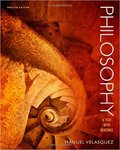
Philosophy: A Text with Readings
Manuel Velasquez
Engaging and compelling on every page, Velasquez's text helps you explore and understand philosophy while it helps you appreciate how philosophy is relevant to your day-to-day life and the larger social world. This trusted text combines clear prose and primary source readings to take you on a meaningful exploration of a range of philosophical topics, such as human nature, reality, truth, ethics, the meaning of life, diversity, and social/political philosophy. Carefully crafted built-in learning aids help you quickly master the material and succeed in your course.
-
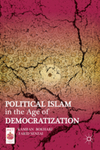
Political Islam in the Age of Democratization
Kamran Bokhari and Farid Senzai
The continued prominence of Islam in the struggle for democracy in the Muslim world has confounded Western democracy theorists who largely consider secularism a prerequisite for democratic transitions. Kamran Bokhari and Farid Senzai offer a comprehensive view of the complex nature of contemporary political Islam and its relationship to democracy.
-
Programming with Java: A Multimedia Approach
Radhika S. Grover
Suitable for readers with little or no programming experience, this comprehensive introduction to programming with Java provides readers with an easy-to-understand, in-depth treatment of Java.Programming with Java: A Multimedia Approach uses multimedia-based programs as a means of instruction. With this book, the reader will learn Java using programs that draw graphics and images, perform animation, read and play audio files, display video, and more.
Unlike the conventional approach of using a console output in programs, this book utilizes a multimedia approach right from the start, creating examples that are imaginative and interesting. The author carefully explains both basic and advanced concepts by providing simple frameworks that the reader can use to write programs. With a focus on hands-on learning, a large project is developed incrementally in relevant chapters to help explain new concepts as well as demonstrate how these concepts relate to material previously discussed.
Programming with Java: A Multimedia Approach covers topics such as Java 2D classes, user-defined classes, inheritance, interfaces, exception handling, GUI programming, generics and collections, multithreaded programming, and more.
-
Reflections on Renaissance Venice: A Celebration of Patricia Fortini Brown.
Mary E. Frank and Blake de Maria
Inspired by the teachings and research of Patricia Fortini Brown, a renowned scholar of Venetian art and history, these beautifully illustrated essays by leading scholars address topics ranging from painted Venetian narrative cycles of the late 15th century to the rebuilding of the Campanile in the early 20th century. This book was derived from papers given at the Giorgione Symposium held at Princeton University on the occasion of Fortini Brown’s recent retirement. The superb study offers new reflections on artists as diverse as Andrea Mantegna, the Bellini family, Giorgione, Pietro Lombardo, Paolo Veronese, Andrea Palladio, and Giovanni Battista Piranesi.
-
Rights and Revolution: The Rise and Fall of Nicaragua’s Sandinista Movement
Stephen F. Diamond
The victory of the Sandinista Revolution in Nicaragua in 1979 opened up a major new battleground in the Cold War between east and west. That larger conflict caused many to ignore or misjudge the domestic battle for democratic rights carried out by ordinary Nicaraguans, first against the Somoza dictatorship, and then against the Frente Sandinista, which led the Revolution. In Rights and Revolution: The Rise and Fall of Nicaragua's Sandinista Movement, political scientist and legal scholar Stephen F. Diamond examines the conflict inside Nicaragua from a viewpoint that is critical of the FSLN, which was allied closely with Cuba and the Soviet Union, and of the United States, which formed a proxy army to overthrow the FSLN regime. Such an independent viewpoint yields important and original insights into the complex relationship between authoritarianism and democracy in the developing world.
-
Robert McAfee Brown: Spiritual & Prophetic Writings
Robert McAfee Brown and Paul Crowley SJ
Robert McAfee Brown (1920-2001), an American Presbyterian, was a master theologian, a spiritual guide, and an engaged activist, whose long career reflected many of the critical movements and concerns of the twentieth century. As an official Protestant observer at Vatican II, he was an influential figure in the ecumenical movement. But his concerns ranged widely over the intersection between faith and the issues of his time: the Holocaust and Jewish-Christian relations; the Civil Rights movement and race relations; the emergence of Latin American liberation theology; the Vietnam War and the struggle for peace in Central America; and the changing shape of Protestant theology. Overall, his work represented a prophetic style of public theology, in which faith and practice, prayer and action, words and deeds, and religion and politics came full circle.
-
Rural Community Libraries in Africa: Challenges and Impacts
Valeda F. Dent, Geoff Goodman, and Michael J. Kevane
Around the word, in developed as well as developing countries, libraries play an important role in the dissemination of knowledge. The availability of information resources can often mean the difference between poverty and prosperity, particularly in underdeveloped African communities.
Rural Community Libraries in Africa: Challenges and Impacts investigates the relationship between local libraries and community development. From the historical roots of rural libraries to their influence on the literacy, economy, and culture of the surrounding region, this book will present academics, researchers, and, most importantly, librarians with crucial insight into the tangible benefits of rural community libraries and the obstacles they must overcome.
-
Social Justice: Professionals, Communities and Law, 2nd Edition
Martha Mahoney, John Calmore, and Stephanie M. Wildman
Mahoney, Calmore and Wildman's Social Justice: Professionals, Communities and Law, 2d provides materials on law, lawyers, and social justice and helps students understand the complicated relationship between law and activism. Now used in law school classrooms, clinics, and undergraduate courses, this text enriches students’ view of the legal profession and stimulates them to think broadly about the roles of lawyers who work for social change. In three parts – a system of lawyers, a system of law, and a system of politics – the book provides both historic perspective and a modern blueprint. Students will explore the meaning of rights and the ways in which movements and lawyers defend existing rights and mobilize for new rights claims.
The second edition preserves the organization and coverage of the popular first edition, with new notes, citations to recent literature, and excerpts that address cutting edge issues. Revisions and additions include recent federal reforms that reduce the burden of student loan repayment, work toward a right to counsel in civil cases, "low bono" legal services, the economic crisis and recession, Hurricane Katrina, the impact of foreclosures on inner cities, and gains and challenges in the struggle for equality for sexual minorities. The campaign for marriage equality provides new opportunities to address effective methods for achieving social change and the impact of temporary setbacks on movements, tactics, and law. Sections of the book are suitable for use in courses on professional responsibility, community lawyering, law and social change, and clinical skills.
-
Strangled Cry: The Communication and Experience of Trauma
Aparajita Nanda and Peter Bray
The chapters in this collection seek to set up meaningful dialogue between scholars in the field of trauma studies. The goal is to create conversations that add to a critical appraisal of the primary theme. Communication being crucial in this context, the intention of this compilation is to reflect in its chapter divisions an exchange of ideas about a crucial topic in human history. By history is meant not only knowledge dealing with past events related to the human race but also history as 'his-story' - the personal narrative of a particular person.Hence the fifteen chapters, divided into three sections, move from the individual response, which often seeks a collective voice, to a search for resolution of trauma.
-
Teardown: Memoir of a Vanishing City
Gordon Young
After living in San Francisco for 15 years, journalist Gordon Young found himself yearning for his Rust Belt hometown: Flint, Michigan, the birthplace of General Motors and “star” of the Michael Moore documentary Roger & Me. Hoping to rediscover and help a place that once boasted one of the world’s highest per capita income levels, but is now one of the country's most impoverished and dangerous cities, he returned to Flint with the intention of buying a house. What he found was a place of stark contrasts and dramatic stories, where an exotic dancer can afford a lavish mansion, speculators scoop up cheap houses by the dozen on eBay, and arson is often the quickest route to neighborhood beautification.
Skillfully blending personal memoir, historical inquiry, and interviews with Flint residents, Young constructs a vibrant tale of a once-thriving city still fighting—despite overwhelming odds—to rise from the ashes. He befriends a rag-tag collection of urban homesteaders and die-hard locals who refuse to give up as they try to transform Flint into a smaller, greener town that offers lessons for cities all over the world. Hard-hitting, insightful, and often painfully funny,Teardown reminds us that cities are ultimately defined by people, not politics or economics. -
The American Legal System and Civic Engagement.
Kenneth A. Manaster
In recent years there has been a widely-recognized and serious lack of rational and civil public discussion about current issues. In The American Legal System and Civic Engagement, Manaster asserts that ordinary citizens can form their opinions on public issues more intelligently, confidently, and responsibly if they have some guidance on how to do it. Drawing from the tools and traditions of the American legal system, he offers guidance to aid citizens in understanding public issues and participating in the type of responsible public debate these challenging issues deserve. From analyzing the influence of the media in informing the public, to examining the role of the citizen as a juror, The American Legal System and Civic Engagement is a practical and informative guide to how Americans can better perform the civic duty that modern democracy requires.
-
The Evolving God: Charles Darwin on the Naturalness of Religion
J. David Pleins
In focusing on the story of Darwin's religious doubts, scholars too often overlook Darwin's positive contribution to the study of religion. J. David Pleins traces Darwin's journey in five steps. He begins with Darwin's global voyage, where his encounter with religious and cultural diversity transformed his understanding of religion. Surprisingly, Darwin wrestles with serious theological questions even as he uncovers the evolutionary layers of religion from savage roots. Next, we follow Darwin as his doubts about traditional biblical religion take root, affecting his career choice and marriage to Emma Wedgwood. Pleins then examines Darwin's secret notebooks as he searches for a materialist theory of religion. Again, other surprises loom as Darwin's reading of Comte's three stages of religion's development actually predate his reading of Malthus. Pleins explores how Darwin applied his discovery to the realm of ethics by formulating an evolutionary view of the "Golden Rule" in his Descent of Man. Finally, he considers Darwin's later reflections on the religion question, as he wrestled with whether his views led to atheism, agnosticism, or a new kind of theism. The Evolving God concludes by looking at some of the current religious debates surrounding Darwin and suggests the need for a deeper appreciation for Darwin as a religious thinker. Though he grew skeptical of traditional Christian dogma, Darwin made key discoveries concerning the role and function of religion as a natural evolutionary phenomenon.
-
The Resurrection, Did it really happen and why does that matter?
Sandra M. Schneiders
Did it really happen, and why does it matter? These two questions are at the heart of Sandra M. Schneiders (IHM) talk on the resurrection, presented at the Marymount Institute as the inaugural event in the Mary Milligan Lecture in Spirituality series. Published as an essay in book form by the Marymount Institute Press and Tsehai Publishers, The Resurrection poses a number of questions about the meaning of Easter as a religious holiday. What does it mean to say that Christ is risen? Does it mean that he is immortal, a spirit alive with God somewhere outside of earthly time and pace (which most Christians believe is true of all who die in faith), or did something unique, that has happened to no one else, happen to Jesus on the first Easter? And, if so, what was it, and why is this event unique significant for us? asks Schneiders in her introduction to the book.
-
The Student Leadership Challenge: Five Practices for Becoming an Exemplary Leader (2nd Ed.)
Barry Z. Posner and James M. Kouzes
This edition includes an access code so students can take the Student Leadership Practices Inventory Self Online, a brief, 30-question assessment to help them explore their own leadership behaviors and skills and determine the steps they can take to liberate the leader within and become their best selves. If you rent or purchase a used book, the access code may have been redeemed previously and will no longer work.
In this updated and expanded second edition of "The Student Leadership Challenge, " James Kouzes and Barry Posner apply their extensive research and expertise to demonstrate that anyone can be a leader, regardless of age or experience. They challenge high school and undergraduate college students to examine their leadership actions and aspirations. Your students will learn from first-hand leadership stories from young leaders like themselves around the world, helping them to deeply understand and explore The Five Practices of Exemplary Leadership: Model the Way Inspire a Shared Vision Challenge the Process Enable Others to Act Encourage the Heart.
The book guides students through the concrete actions they can take to become exemplary leaders, from finding their voice and clarifying their values, to recognizing others' contributions and celebrating others' victories. The authors ask readers to reflect at the end of each chapter on their own leadership experiences and abilities now and for the future.
-
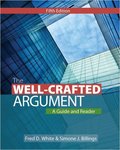
The Well-Crafted Argument (5th Edition)
Fred White and Simone Billings
Incorporating new articles, expanded commentary, and the most current MLA and APA citation models, the fifth edition of THE WELL-CRAFTED ARGUMENT guides students through the process of writing effective arguments across the disciplines. The two-part structure of this rhetoric/reader includes a complete pedagogical apparatus--with coverage of critical reading strategies, as well as writing, researching, and documenting a topic--and an anthology of readings grouped into nine thematic clusters. In-depth instruction, combined with real student writings, engages students and helps them discover their own voices. The text's visual emphasis and the authors' practical skill-building approach are enhanced with a new full-color format. Each chapter in Part I ends with a "Summary," "Checklist," and "Writing Projects," while each cluster in Part II ends with "Connections Among the Clusters," "Writing Projects," and "Suggestions for Further Reading." These sections encourage students to apply what they've learned and go beyond the classroom if a topic is of particular interest to them. In addition to guidance on drafting and revising arguments, the authors provide a variety of composition strategies, including freewriting, outlining, and shared reading. A new chaper on "Arguing Across the Disciplines" provides strategies for arguing effectively when writing in a variety of majors.
-
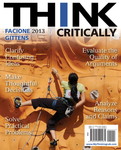
Think Critically, (2nd Edition)
Peter Facione and Carol Ann Gittens
THINK Critically is a cutting-edge, self-reflective guide for improving critical thinking skills through careful analysis, reasoned inference, and thoughtful evaluation of contemporary culture and ideas.
An engaging visual design developed with extensive student feedback and 15-page chapters makes THINK Critically the textbook your students will actually read. It delivers the core concepts of critical thinking in a way they can easily understand. Additionally, engaging examples and masterful exercises help students learn to clarify ideas, analyze arguments, and evaluate reasoning.
-
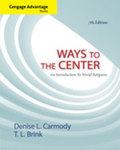
Ways to the Center: An Introduction to World Religions (7th Edition)
Denise L. Carmody and T. L. Brink
Striving to be the most student-friendly textbook in this field, WAYS TO THE CENTER: AN INTRODUCTION TO WORLD RELIGIONS, Seventh Edition, weaves together rich historical, cultural, and theological detail into structural and philosophical sections that analyze each of the world’s major religions in terms of its views on nature, society, self, and ultimate reality. The readily accessible text is designed for today’s students and places a premium on the development of critical thinking. Combining both historical and systematic analyses, the book takes as its focus the theme of personal centeredness--a primary goal of each featured religion.
-
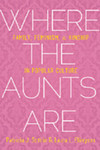
Where the Aunts Are Family, Feminism, and Kinship in Popular Culture
Patricia J. Sotirin and Laura L. Ellingson
While the aunt is one of the most iconic and beloved figures in popular culture, the societal role and import of real-life contemporary aunts are difficult to pin down. In some settings, she is the sole supporter, caregiver, or surrogate mother and exceeds her familial function as an aunt. In others, she subtly—or not so subtly—transgresses the assumed narrative of feminine identity. Surveying characters from Aunt Bee and Auntie Em to Bernie Mac's Aunt Wanda and House of Payne's Aunt Ella and countless living, breathing aunts across the country, Where the Aunts Are re-visions the ideals of family, femininity, and kinship and, in the process, offers a hopeful and progressive recognition of the multiple possibilities of womanhood in modern culture.
-
A Companion to Hrotsvit of Gandersheim (fl. 960)
Phyllis R. Brown and Stephen L. Wailes
Hrotsvit, a canoness in the German convent Gandersheim, wrote Latin poems, stories, plays, and histories during the reign of Emperor Otto the Great (962-973). She expresses a strong sense of authorial mission in letters, prefaces, and dedications. These personal writings, as well as her full literary corpus, are studied in twelve original essays by scholars from Europe and North America, who bring several perspectives to bear. Her historical roots are shown, both in her use of Christian literary tradition (e.g., the legend) and in her understanding of political forces shaping her time. Her strong spirituality emerges from vivid portraits not only of martyrs but also of men and women who question and doubt the Lord, while her openness to problems of sexuality, and of the need for women to realize their individuality and particular gifts, is surprisingly modern.
Contributors include: Walter Berscin, Katrinette Bodarwé, Jay Lees, Gary Macy, Linda McMillin, Florence Newman, and Lisa Weston
-
Advances in Motivation and Achievement, Volume 17
Stuart A. Karabenick and Timothy C. Urdan
Transitions are woven into the fabric of students’ school experiences. They can range from changing classes during the day to changing grades or moving from one country to another during high school and beyond. All transitions can create challenges due to a combination of developmental, social, and curricular changes that occur when students shift from one education context to another. Most attention to date has focused on normative transitions: those from pre-kindergarten to elementary, middle, and high school, which may be followed by additional schooling or work. Early research, beginning with Simmons, Eccles, Midgley, and their colleagues, among others, focused on the transition from elementary to middle or junior high school, and included attempts to account for the decline in adaptive motivation that occurred with the transition. Among the explanations for the decline are that middle schools no longer “fit” students’ developmental stage and increased concerns about failure, interpersonal comparisons, and emphasis on evaluation.
-
Beyond Nature’s Housekeepers: American Women in Environmental History
Nancy Unger
From pre-Columbian times to the environmental justice movements of the present, women and men frequently responded to the environment and environmental issues in profoundly different ways. Although both environmental history and women's history are flourishing fields, explorations of the synergy produced by the interplay between environment and sex, sexuality, and gender are just beginning. Offering more than biographies of great women in environmental history, Beyond Nature's Housekeepers examines the intersections that shaped women's unique environmental concerns and activism and that framed the way the larger culture responded. Women featured include Native Americans, colonists, enslaved field workers, pioneers, homemakers, municipal housekeepers, immigrants, hunters, nature writers, soil conservationists, scientists, migrant laborers, nuclear protestors, and environmental justice activists. As women, they fared, thought, and acted in ways complicated by social, political, and economic norms, as well as issues of sexuality and childbearing. Nancy C. Unger reveals how women have played a unique role, for better and sometimes for worse, in the shaping of the American environment.
-
California Native Gardening: A Month-by- Month Guide
Helen Ann Popper
This is the first month-by-month guide to gardening with native plants in a state that follows a unique, nontraditional seasonal rhythm. Beginning in October, when much of California leaves the dry season behind and prepares for its own green “spring,” Helen Popper provides detailed, calendar-based information for both beginning and experienced native gardeners. Each month’s chapter lists gardening tasks, including repeated tasks and those specific to each season. Popper offers planting and design ideas, and explains core gardening techniques such as pruning, mulching, and propagating. She tells how to use native plants in traditional garden styles, including Japanese, herb, and formal gardens, and recommends places for viewing natives. An essential year-round companion, this beautifully written and illustrated book nurtures the twin delights of seeing wild plants in the garden and garden plants in the wild.
-
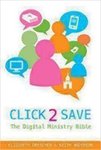
Click 2 Save: The Digital Ministry Bible
Elizabeth Drescher and Keith Anderson
Social media provide an opportunity for congregations to open the doors and windows to their congregational life before people ever step inside. It's no longer all about getting your message out as if people are passively waiting for the latest news from the parish, diocese, or national church. Rather, it s about creating spaces where meaningful relationships can develop. Click 2 Save: The Digital Ministry Bible is a practical resource guide for religious leaders who want to enrich and extend their ministries using digital media like Facebook, Twitter, YouTube and church or personal blogs. An ideal companion to Tweet If You Jesus: Practicing Church in the Digital Reformation (Morehouse, 2011), Click 2 Save draws on extensive research and practical experience in church and other ministry settings to provide functional, how-to guidance on effectively using social networking sites in the day-to-day context of ministry.
-
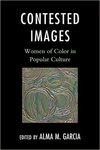
Contested Images: Women of Color in Popular Culture
Alma M. Garcia
Contested Images: Women of Color in Popular Culture is a collection of 17 essays that analyze representations in popular culture of African American, Asian American, Latina, and Native American women. The anthology is divided into four parts: film images, beauty images, music, and television. The articles share two intellectual traditions: the authors, predominantly women of color, use an intersectionality perspective in their analysis of popular culture and the representation of women of color, and they identify popular culture as a site of conflict and contestation. Instructors will find this collection to be a convenient textbook for women’s studies; media studies; race, class, and gender courses; ethnic studies; and more.