
-
The AI-centered Enterprise: Reshaping Organizations with Context Aware AI
Ram Bala, Natarajan Balasubramanian, and Amit Joshi
The explosion of generative AI has sparked a wave of case studies showing how quickly and profoundly it is transforming businesses. Yet most of these use cases still apply the technology to enhancing existing systems. This book makes the case for why business leaders must revisit the fundamentals of generative AI and look beyond short-term, tactical gains. Tools like ChatGPT mark just the beginning of Context Aware AI—systems that grasp both the content and intent of unstructured human input. Drawing on real-world examples and academic research, we demonstrate how Context Aware AI can enhance organizational interactions, unlock new forms of collaboration, and usher in the era of the AI-Centered Enterprise. By augmenting baseline Large Language Models (LLMs) with techniques like prompt engineering, retrieval-augmented generation (RAG), knowledge graphs, and notably agentic systems, organizations can build customized tools that adapt to individual users’ thinking patterns and the collaborative workflows they are a part of. We present a practical framework—the 3Cs: Calibrate, Clarify, Channelize, to help leaders navigate this radical shift across multiple levels of organizations.
-
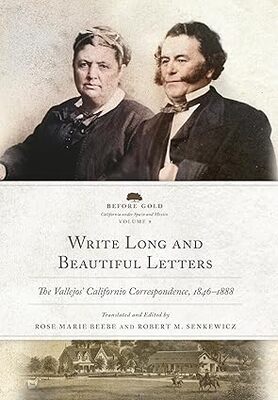
Write Long and Beautiful Letters: The Vallejos' Californio Correspondence, 1846–1888
Rose Marie Beebe and Robert M. Senkewicz
The experiences of Mexicans who were living in California when it was annexed by the United States is a crucial element of the history of the American Southwest. These Californios, as they called themselves, made California diverse and multicultural from the moment it became part of the United States.
The Vallejos of Sonoma were one of the most prominent of these Californio families. This volume explores the experiences of this family, using more than 180 letters that Mariano Guadalupe Vallejo and Francisca Benicia Carrillo de Vallejo exchanged with each other and their children between 1846 and 1888.
This correspondence offers an intimate glimpse of the ways in which this family, and many Californio families from a variety of social and economic backgrounds, struggled to adapt to the political, social, and cultural changes that accompanied American annexation. They often found themselves unwelcome strangers in the land in which they had been born. They faced changing and at times conflicting demands on their public and private lives. In the face of a hostile legal system, they struggled to maintain ownership of their property, to raise their children in an environment they did not entirely understand, and to help each other maintain their dignity and social authority in a world they had not chosen.
These letters demonstrate how the Vallejos and families like them, frequently ridiculed by the Anglos who entered California, nonetheless refused to be defined by these newcomers. Describing the creative manner of their resistance, these letters document a crucial aspect of the history of the Latino experience in California and in the greater American Southwest during the second half of the 19th century—with repercussions and relevance reaching into the present era. -

Everyday Democracy: Liberals, Conservatives, and Their Routine Political Lives
Jeffrey M. Berry, James M. Glaser, and Deborah J. Schildkraut
How the everyday habits and attitudes of ordinary liberals and conservatives shape the health of American democracy.
In Everyday Democracy, Jeffrey M. Berry, James M. Glaser, and Deborah J. Schildkraut study Americans’ views of several manifestations of “everyday democracy,” which they define as the attitudes, behaviors, and processes that people experience in daily life and their routine considerations of politics and community. Examples include engaging in dialogue with political opponents and giving politicians license to compromise. Ordinary political moments like these constitute much of politics, and they can lay the foundation that shapes if, when, and how crisis moments unfold.
Paying particular attention to the role of ideology in shaping how Americans emulate daily democratic ideals, this book considers such questions as: How do liberals and conservatives support different aspects of democratic practice, and are there ideological asymmetries between the two groups? If and when asymmetries emerge, what factors might explain them? The authors consider what their findings mean for the health of American democracy broadly.
-
Faceplant: Free Yourself from Failure's Funk
Melisa Buie, Keeley Hurley, and Noël Kreidler
Flip the Script on Failure
By exploring your subconscious patterns of response to failure, Faceplant brings a fresh new mindset to life’s tripping hazards. It’s time to edit your story and let the adventure begin. Discover tools to define new patterns for yourself, create fresh opportunities for engaging in life, and support others as they navigate the gravity of their failures.
-
Writing, Enslavement, and Power in the Roman Mediterranean, 100 BCE–300 CE
Jeremiah Coogan, Candida R. Moss, and Joseph A. Howley
This volume interrogates the intersections between writing and enslavement around the Roman Mediterranean. Drawing upon methods developed in studies of book history and Atlantic slavery, the essays demonstrate the myriad ways that the material and intellectual contributions of literary workers were vital to the composition, editing, copying, circulation, reading, and preservation of Roman texts. The volume exposes the way that power dynamics erase and denigrate enslaved contributions; the manner in which language barriers, travel, gender difference, and disability created dependence on enslaved workers; the prominent role of enslaved workers in practical work like bookkeeping, basic education, and divination; the unseen labor of enslaved collators, note-keepers, editors, and curators; and the influence and representation of enslaved workers and work in literature, letters, and rhetoric.
-
La Sfera / The Globe: Cosmology, Science, and Geography in the Fifteenth-Century Mediterranean
Gregorio Dati, Carrie E. Benes, Laura Ingallinella, Laura K. Morreale, Caterina Agostini, Winston E. Black, Elena Brizio, and Monica Keane
OF ALL THE MISCONCEPTIONS about the Middle Ages, one of the most persistent and erroneous is the claim that people before Christopher Columbus thought the world was flat - a myth popularized in the 1820s by the American novelist Washington Irving. In fact, Europeans had known the world was round since the days of the ancient Greeks, and famous fifteenth-century explorers like Columbus and Prince Henry the Navigator were building on a centuries-long tradition of intercontinental travel and cultural exchange. The study of cosmology and natural philosophy in the Middle Ages always assumed that the Earth was round, as we see in La Sfera ("The Globe") by Gregorio (Goro) Dati (1362-1436). This early-fifteenth-century treatise in poetic form introduced readers to the cosmos, the natural world, and the geography of the Mediterranean. La Sfera summarized Europeans' sense of the world and its geography in the period before Columbus, particularly in those last few decades when middle-class Italians like Dati dominated the global economy.
SEVEN AUTHORS examine the multiple intellectual and literary genres that influenced Dati's La Sfera, including the mapping traditions on which Dati drew for his itinerary and illustrations, the medieval science behind its cosmology, geography, and explanations of the natural world, and the traditions of composition in the Italian vernacular that were especially popular in fifteenth-century Florence. To understand how La Sfera was received by Dati's contemporaries, they also review the many surviving manuscripts of the text - each one handwritten and unique in its witness to Dati's work - and the patterns that emerge among them. The authors explain the editorial choices that produced this edition and translation, based on the linguistic particularities of Dati's Italian and their own policies of editorial practice and translation.
THIS EDITION of Dati's La Sfera was undertaken by a team of scholars who collaborated over several years to establish a base text of the poem in Italian and render it into English. In this volume they combine their academic disciplines and specialties, among them history, the history of science, literary history, textual criticism, and paleography.
THIS VOLUME presents the text of Dati's La Sfera, a parallel English translation, and an array of images from the manuscript tradition to demonstrate how its diagrams and maps enhance the reader's understanding of the text. Each image appears alongside the text that it would normally accompany in the manuscripts. This illustrated edition is therefore the opposite of a facsimile. It offers readers a sense of the diversity of the corpus by reproducing images from different codices. By using this method, the authors hope to give readers a clear understanding of Dati's holistic approach to fifteenth-century poetry, science, art, commerce, and cartography.
-
Native Persistence at a California Mission Outpost: The Bioarchaeology and History of the Asistencia de San Pedro y San Pablo
Jelmer W. Eerkens, Lee M. Panich, Christopher Canzonieri, and Christopher Zimmer
Collaborative research revealing the lives of Ohlone individuals buried at an eighteenth-century Spanish mission outpost
Construction work in 2016 at Sanchez Adobe Park, the site of a historic Spanish mission outpost in the San Francisco Bay Area, led to the surprising discovery of human skeletal remains. This book presents a series of bioarchaeological studies done in collaboration with the Amah Mutsun Tribal Band of Mission San Juan Bautista, the state-appointed Most Likely Descendants of the Ohlone people buried in this cemetery, to explore persistence and change in the lives of Native Californians recruited into the Spanish missions during the late 1700s.
This volume presents cutting-edge research techniques used to study the health, diet, social connections, and medicinal practices of these Ohlone individuals. Studies include obsidian and glass bead sourcing, osteological and paleopathological analysis, stable isotope analysis, and proteomic studies of dental calculus. By comparing these findings with historical records, researchers are even able to identify several of the individuals by name and reconstruct their life histories.
This volume reveals continuity in some traditional Ohlone behaviors as well as new practices influenced by the Spanish. It offers unique insights into the experiences of Native communities during early colonization on California’s Pacific coast. It also serves as a key example of collaborative bioarchaeological research carried out by a tribal community, a local parks department, and both professional and academic archaeologists.
-
Reading Nature: The Evolution of American Nature Writing
John S. Farnsworth
Reading Nature highlights the ten books that most influenced the scope and direction of literary natural history in the United States. It explores how American nature writing came to focus on the deep observation of wild landscapes and how the genre evolved over 163 years, beginning with the publication of Henry David Thoreau’s Walden in 1854. The volume also examines Mary Austin’s Land of Little Rain (1903), John Burroughs’s Ways of Nature (1905), Aldo Leopold’s A Sand County Almanac (1949), Rachel Carson’s The Sea around Us (1951), Edward Abbey’s Desert Solitaire (1968), Annie Dillard’s Pilgrim at Tinker Creek (1974), Terry Tempest Williams’s Refuge (1991), Robin Wall Kimmerer’s Braiding Sweetgrass (2013), and J. Drew Lanham’s The Home Place (2016). This book features a series of close readings exploring how these authors transformed popular understanding of the natural world.
-
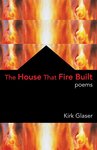
The house that fire built: poems
Kirk Glaser
A house a family inherits that fills their nights and days with nightmare visions and haunting events. A house that burns to the ground and leaves them spinning in mysteries. The House That Fire Built tells the story of the poet and his wife seeking healing and insight as they struggle to protect themselves and their young daughter against menacing assaults from the human and supernatural worlds. Even when an arsonist is discovered, the criminal’s story only peels back greater mysteries about the forces circling the house. This house and arsonist possessed by what? And why? Is it hungry ghosts circling the death of a domineering father who died in the house? A secret loss buried by the former owners? Wounds going back to this land taken from the first peoples of California’s Santa Cruz Mountains? What in themselves led them to step into this world? As the couple is pulled deeper into the disturbing and sometimes violent mysteries of this house, their resilience and sense of reality pushed to the limits, they slowly come to see how the forces of destruction may also be a kind of salvation.
-
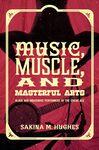
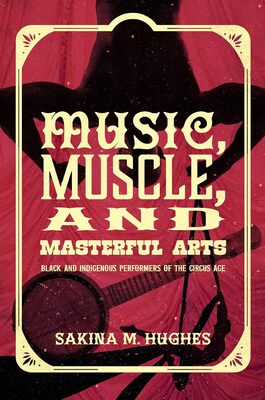
Music, Muscle, and Masterful Arts: Black and Indigenous Performers of the Circus Age
Sakina M. Hughes
Before the heyday of the Chitlin Circuit and the Harlem Renaissance, African American performing artists and creative entrepreneurs—sometimes called Black Bohemians—seized their limited freedoms and gained both fame and fortune with their work in a white-dominated marketplace. These Black performers plied their trade in circuses, blues tents, and Wild West Shows with Native Americans. The era’s traveling entertainments often promoted the “disappearing Indian” myth and promoted racial hierarchies with Black and Native people at the bottom. But in a racial economy rooted in settler-colonialism and legacies of enslavement, Black and Indigenous performers found that otherness could be a job qualification. Whether as artists or manual laborers, these workers rejected marginalization by traveling the world, making a solid living off their talents, and building platforms for political and social critique. Eventually, America’s popular entertainment industry could not survive without Black and Native Americans’ creative labor. As audiences came to eagerly anticipate their genius, these performers paved the way for greater social, economic, and cultural autonomy.
Sakina M. Hughes provides a conceptually rich work revealing memorable individuals—laborers, artists, and entrepreneurs—who, faced with danger and discrimination, created surprising opportunities to showcase their talents and gain fame, wealth, and mobility. -

Senderos fronterizos
Francisco Jimenez
After Panchito and his family had been living in the United States for many years as immigrants, they were discovered by the border patrol and deported back to Mexico when he was 14. In this sequel to Cardboard Boxes, Francisco Jiménez recounts this and other challenges he experienced in his youth. He takes a chronological journey through various significant episodes of this period: school, dances, friends, work, his family, and finally, the hope and challenge of being able to attend university. In this sense, he reflects the blossoming of a young migrant in a hostile land, yet one full of dreams.
-
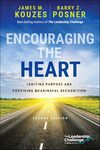
Encouraging the Heart: Igniting Purpose and Providing Meaningful Recognition (2nd Edition)
James M. Kouzes and Barry Z. Posner
Human-centered leadership insights from the leading experts on the subject
In the newly revised second edition of Encouraging the Heart: Igniting Purpose and Providing Meaningful Recognition, renowned leadership experts and best-selling authors James Kouzes and Barry Posner deliver an incisive and practical playbook for leaders who want to inspire their followers to achieve extraordinary things. They've packed the book with real-world examples, practical ideas, and eye-opening advice drawn from over four decades of work with countless business leaders.
Encouraging the Heart is not a book about incentive systems or reward programs. It goes beyond those things to discuss universal leadership principles that will help elevate your people to new levels of productivity, engagement, and performance. It's a hands-on roadmap containing behaviors, principles, practices, evidence, and examples that will form the foundation of a repeatable process you can put into place at your own organization.
Inside the book you'll find strategies for:
- Setting clear standards aligned with your organization's purpose
- Paying attention to exemplary actions and telling memorable stories that motivate action and enact change
- Noticing exemplars of values and standards and publicly praising them with personalized feedback and appreciation that encourages others to live up to their example
- Setting a personal example of meaningful ways to recognize others and celebrate values and victories
Encouraging the Heart is a must-read for leaders of all kinds, regardless of position or function, at organizations of all sizes, in the public and private sectors who wish to help those around them realize their full potential.
-
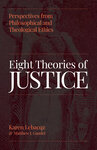
Eight Theories of Justice: Perspectives from Philosophical and Theological Ethics
Karen Lebacqz and Matthew J. Gaudet
There may be no more urgent cry than that for justice--and no more frequent accusation than that of injustice. But what is meant when these terms are used? Since its initial publication nearly forty years ago, Karen Lebacqz's Six Theories of Justice has been the go-to guide for answering this question. But today, the matters upon which it touches are even more acute.
Eight Theories of Justice offers a major update and expansion of the earlier text. Together with coauthor Matthew J. Gaudet, Lebacqz presents the major alternative views of justice, including John Stuart Mill's utilitarianism, the contract system of John Rawls, the entitlement views of Robert Nozick, and the communitarian ideas of Michael Sandel. These political and philosophical accounts of justice are supplemented with analysis of major theological approaches: Pope Francis and Catholic social teaching, Reinhold Niebuhr and Christian realism, the Black liberation theology of James Cone, and Katie Cannon's womanist ethics. Each chapter introduces the major elements of each theory, presents the best critiques of each theory, and offers an assessment of their value for living justly in the modern world.
-
Smart Grid and Innovative Frontiers in Telecommunications: 8th EAI International Conference
Xiang Li, Yuhong Liu, and Fan Wu
This book constitutes the refereed proceedings of the 8th EAI International Conference on Smart Grid Inspired Future Technologies, SmartGift 2024a, which was a virtual event, held during March 23–24, 2024.
The 11 full papers presented in this volume were carefully reviewed and selected from 39 submissions.
They are grouped into the following topics: wireless communication and distribution network; artificial intelligence technologies; security in wireless communication; system design for smart grid and IoT.
-
China's church divided : Bishop Louis Jin and the post-Mao Catholic revival
Paul P. Mariani
During the Cultural Revolution, the Chinese state sought to eradicate religious life throughout the country. But by 1978, two years after the death of Mao Zedong, the Communist Party under Deng Xiaoping cautiously embraced the revival of religion. At the same time, in Rome, the newly elected Pope John Paul II made a point of renewing outreach to China. Paul P. Mariani tracks the fate of Chinese Catholicism in the wake of these transformative leadership changes, focusing on the influential Catholic community in Shanghai.
Even as Chinese Catholicism came back to life in the 1980s, the way forward was hardly an easy one. Earlier policies of the 1950s had fractured the Catholic community into a state-approved “patriotic” church that answered to the government and an underground church loyal to Rome. Even after the Cultural Revolution, Mariani shows, this divide remained firmly intact. The resulting tensions were on vivid display in Shanghai, owing to the leadership of the Jesuit priest Louis Jin Luxian. Formerly a member of the underground church, Jin realigned with the state church during the revival and was consecrated bishop of Shanghai without papal approval in 1985. Bishop Jin used his position to revitalize the local Catholic community, but his cooperation with the party put him ever at odds with underground church leaders.
Sensitive to the ideals, compromises, and disappointments of Catholics on both sides of the rift, China’s Church Divided reveals how the community navigated the irreconcilable differences between a worldwide Church centered in Rome and a regime wary of foreign spiritual authority.
-
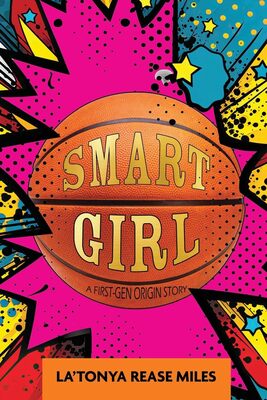
Smart Girl: A First-Gen Origin Story
La'Tonya Rease Miles
Smart Girl: A First-Gen Origin Story is a memoir that redefines first-gen and Black student narratives that highlights mass media, pop culture, and sports as key to shaping identity, resilience, and community. In her memoir, Dr. Rease Miles traces the (sound)tracks of her life as she journeys through myriad K-12 public schools and several college experiences toward a Ph.D. and beyond, battling self-doubt, racism, "imposter syndrome," and "survivor's guilt" to transform the higher education landscape for herself, her family, and community. Smart Girl shifts the focus of first-gen memoirs from solely academic grit to exploring the everyday cultural forces that shape identity and resilience.
-

Revit Architecture 2026 for Electrical Workers
Elise Moss
Finally! The book electrical workers have been waiting for, an introduction to Autodesk Revit written just for you! Featuring exercises based on real work situations, Revit Architecture 2026 for Electrical Workers will help get you up to speed quickly on developing your own construction documents. The author developed and coordinated this book with a local chapter of electrical workers to ensure it would meet the needs of electrical journeymen. This textbook shows you how to work with Revit documents provided by outside contractors and architects.
Using this textbook, you will be able to learn enough skills in Revit to be fully functional in less than a week. The textbook can be used in a training class or by someone teaching themselves in their own home or office. If you can open a file and use a mouse, you can learn Revit. You don't need a college degree to use Revit software. There is no other Revit book out there that covers so much material specifically for electricians and electrical engineers.
Knowing Autodesk Revit software is a valuable skill that will help you earn more money, increase your value as an employee, and collaborate better with other team members.
This textbook was written by Elise Moss, an Autodesk Certified Instructor. Elise has experience training machinists, electricians, and equipment installers. She knows how to break down software content to make it easy to understand and learn quickly.
-
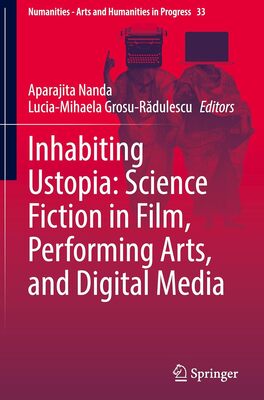
Inhabiting Ustopia: Science Fiction in Film, Performing Arts, and Digital Media
Aparajita Nanda and Lucia-Mihaela Grosu-Rădulescu
This volume contributes to research in both humanities and performing arts without disregarding the more recent digital artistic media by focusing on works of science fiction (Sci-Fi). The book's structure mirrors the themes approached in an effort to contextualize the Atwoodian concept of 'ustopia' by addressing a variety of topical subjects, such as transhumanism, ethical dilemmas, subjectivities in a digital world, in science fiction theater, opera, and art installations as well as film and new digital media.
The book collects interpretations of transmedial performances, comparisons of films and novels, videogames, and other immersive platforms. The contributors include a range of academics and specialists from Japan, Romania, India, Spain, Ireland, and the U.S.A. Recent preoccupations with Artificial Intelligence and its advantages and threats have also meant a re-assessment of Sci-Fi creations and their relevance. The book appeals to students and researchers in the humanities, media studies, performance arts, as well as larger audiences interested in comparative and analytic discussions of Sci-Fi works anchored in real-life concerns. -
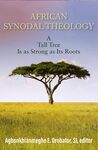
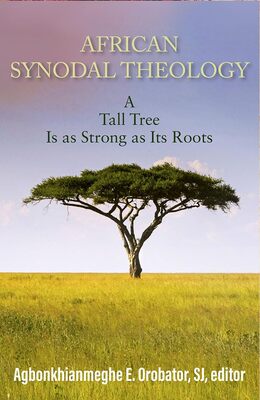
African Synodal Theology: A Tall Tree Is as Strong as Its Roots
Agbonkhianmeghe Orobator S.J.
“Synodality” means “journey together” and for the late Pope Francis synodality expresses “the Church’s nature, her form, style, and mission.” Yet, even several years into the synodal journey, it remains an ecclesiology in need of a theology. Here, many of Africa’s leading Catholic theologians respond to that need, clarifying and deepening the understanding, knowledge, and practice of synodality in the local churches.
-
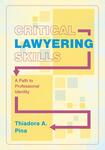
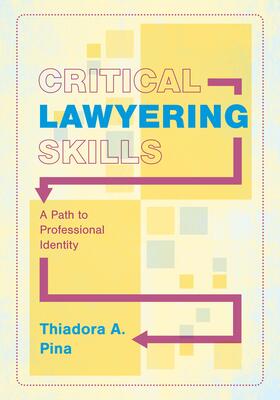
Critical Lawyering Skills: A Path to Professional Identity.
Thiadora Pina
Developing a strong professional identity is crucial for success in the legal field. To help law students navigate this process effectively, Critical Lawyering Skills provides practical tools and exercises. This workbook aligns with ABA Standards 303(b)(3) and (c), including addressing well-being and social (cultural) competence, and features learning objectives, rubrics, and assessment tools. The workbook format enables students to practice these skills rather than simply reading about them. By engaging with the CLS material, law students will gain a clearer perspective on their role as a lawyer and the responsibilities that come with it, which will serve students well as they transition from law student to practicing attorney.
-
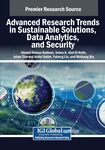
Advanced research trends in sustainable solutions, data analytics, and security
Ahmed G. Radwan, Salwa K. Abd-El-Hafiz, Islam Tharwat Abdel Halim, Yuhong Liu, and Meikang Qiu
In the rapidly evolving landscape of technology, innovation, and sustainability, there is a growing need to explore advanced research trends that shape our understanding and implementation of solutions for a sustainable future. Emerging fields such as renewable energy, artificial intelligence (AI), and circular economy principles are at the forefront of this exploration, driving transformative changes across industries. Understanding these trends allows us to create resilient solutions to promote economic growth, environmental protection, and social well-being. This commitment to innovation and sustainability will be essential for fostering a balanced and prosperous future. Advanced Research Trends in Sustainable Solutions, Data Analytics, and Security introduces new research trends that could change how we perceive, use, and integrate technology in a rapidly changing world. It advances the understanding of how technology and innovation can contribute to sustainable development, fostering interdisciplinary collaborations that transcend traditional boundaries, and inspiring actionable initiatives that address global challenges. Covering topics such as artificial intelligence (AI), green infrastructure, and sustainable tourism, this book is an excellent resource for researchers, practitioners, policymakers, academicians, and more.
-
Community-Engaged Research for Environmental Justice
Chad Raphael, Martha Matsuoka, and Ana Isabel Baptista
Community-engaged research (CER) advances environmental justice by centering the local knowledge and concerns of frontline communities in the research agenda, creating equitable and mutually beneficial relationships between these communities and professional researchers, and co-producing actionable data that can influence policies and practices. This Special Issue welcomed empirical and conceptual articles on environmental justice that employ any CER approach, including participatory action research, community-based participatory research, citizen science and community science, and Indigenous-led and decolonial research. This research involved collaborations with community organizations and advocates by academic and other professional researchers, and/or government agencies. The editors were especially interested in CER that recognizes the intersectional roots of environmental injustices in colonialism, racism, economic exploitation and patriarchy, and that can inform policy and practical responses to urgent issues of environmental justice. For open-access, full-text versions of all articles in the issue, see https://www.mdpi.com/journal/socsci/special_issues/4RMVUHAVCB
-
Other Illuminations. Narrative, Culture and Psychedelics
Alberto Ribas-Casasayas and Ana Luengo
From different angles and critical perspectives, the essays that make up Other Illuminations address the representation of the psychedelic experience in Spanish-language cultural production, with particular emphasis on its contemporary reception. From this common thread, they explore related issues such as the recent shift—in what has been called the "psychedelic renaissance"—in discourses on entheogens and their use, the asymmetrical relationships that govern their global circulation, and their symbolic relevance—both for the community identity of ancestral peoples and for the formation of new cultural imaginaries.
-

The Road To Trantor (audio CD)
Carl Schultz, Tim Wendel, Adam Benjamin, Zack Teran, and Alwyn Robinson
While composing for his newest recording, saxophonist Carl Schultz realized he was visualizing rich cinematic landscapes as his tunes were taking form. Likely related to his rereading of Hugo Award winning science fiction books at the time, it made sense to flesh out a complete narrative for the compositions to take, thus The Road to Trantor, the soundtrack of an epic tale that exists only in the mind of Schultz. Armed with a concept, some electronics, and an ensemble well-versed in evocative, highly creative explorations, Schultz, guitarist Tim Wendel, keyboardist Adam Benjamin, bassist Zack Teran, and drummer Alwyn Robinson create an expansive album of modern jazz that unfolds in the dramatic arc of a mesmerizing saga well-told.
-
A Theology of Flourishing: The Fullness of Life for All Creation
Paul J. Schutz
Proposing a groundbreaking theological approach to what it means to truly thrive, A Theology of Flourishing reframes Christian thought around the concept of abundant life for all of creation. Drawing from scripture, tradition, and contemporary theology, Schutz argues that flourishing is God’s fundamental intention for the universe. Suitable for students and scholars alike, this timely work confronts modern crises of injustice, inequality, and ecological destruction while constructing a fresh, hope-filled vision of Christian life for the well-being of all.
Printing is not supported at the primary Gallery Thumbnail page. Please first navigate to a specific Image before printing.