
-
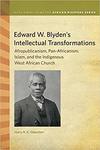
Edward W. Blyden's Intellectual Transformations: Afropublicanism, Pan-Africanism, Islam, and the Indigenous West African Church
Harry N. K. Odamtten
Distinguished by its multidisciplinary dexterity, this book is a masterfully woven reinterpretation of the life, travels, and scholarship of Edward W. Blyden, arguably the most influential Black intellectual of the nineteenth and early twentieth centuries. It traces Blyden’s various moments of intellectual transformation through the multiple lenses of ethnicity, race, religion, and identity in the historical context of Atlantic exchanges, the Back-to-Africa movement, colonialism, and the global Black intellectual movement. In this book Blyden is shown as an African public intellectual who sought to reshape ideas about Africa circulating in the Atlantic world. The author also highlights Blyden’s contributions to different public spheres in Europe, in the Jewish Diaspora, in the Muslim and Christian world of West Africa, and among Blacks in the United States. Additionally, this book places Blyden at the pinnacle of Afropublicanism in order to emphasize his public intellectualism, his rootedness in the African historical experience, and the scholarship he produced about Africa and the African Diaspora. As Blyden is an important contributor to African studies, among other disciplines, this volume makes for critical scholarly reading.
-
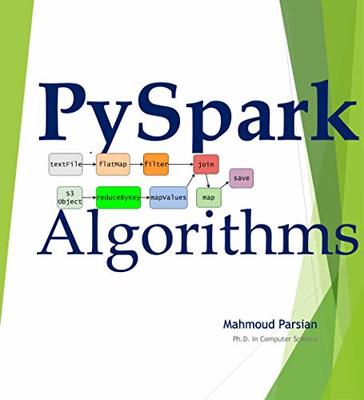
PySpark Algorithms
Mahmoud Parsian
This is an introductory book on PySpark.
This book is about PySpark: Python API for Spark.
Apache Spark is an analytics engine for large-scale
data processing. Spark is the open source cluster
computing system that makes data analytics fast
to write and fast to run. This book provides a
large set of recipes for implementing big data
processing and analytics using Spark and Python.
The goal of this book is to show working examples
in PySpark so that you can do your ETL and
analytics easier. You may cut and paste examples to
deliver your applications in PySpark.This book introduces PySpark (Python API for Spark).
You can use PySpark to tackle big datasets quickly
through simple APIs in Python. You will learn how to
express parallel tasks and computations with just a
few lines of code, and cover applications from ETL,
simple batch jobs to stream processing and machine
learning.With this book, you may dive into Spark capabilities
such as RDDs (resilient distributed datasets),
DataFrames (data as a table of rows and columns),
in memory caching, and the interactive PySpark
shell, where you may leverage Spark's powerful built
in libraries, including Spark SQL, Spark Streaming,
and MLlib.In this book, you will learn Spark's transformations
and actions by a set of well-defined and working
examples. All examples are tested and working: this
means that you can copy-cut-paste to your desired
PySpark applications. Writing PySpark is much easier
than writing Spark applications in Java and PySpark
applications are not bulky at all when compared to
Java Spark. -
A brief course in modern math for programmers
Vlad Patryshev
Programmers with the classical software engineering background need to learn more mathematics these days. The world is changing; we have to change, too. This book is dedicated to covering the issues that until recently were not very popular in software engineering: logic, monoids, algebraic structures, categories, and monads. All these topics are explained in the book, with no assumptions about the reader's educational background, with many examples. Most of the examples and explanations use two popular programming languages, JavaScript and Scala.
The book has no theorems and almost no proofs. The purpose of the book is to expand the reader's imagination and to open the gates to the beautiful world of mathematics—at the same time keeping in mind the practical usability of its ideas and notions in our daily coding practice.
-
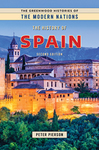
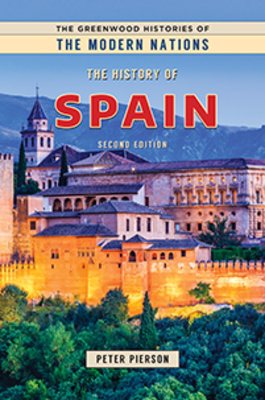
The History of Spain (2nd Edition)
Peter Pierson
This updated and expanded edition of The History of Spain offers an in-depth examination of Europe's fifth largest economy, providing important coverage on the last two decades of Spanish history in particular. Following a general introduction to Spain, its government, and the diversity of its people and geography, this volume follows Spain's unique history chronologically from the earliest archeological evidence.
Starting with Spain's incorporation into the Roman Empire, subsequent chapters cover Spain's medieval experience of Islam, Christianity, and Judaism; its unification; its "Golden Age" of world empire and cultural splendor; Napoleon's invasion of Spain; and its troubled period that lasted for more than a century. The volume examines why, in 1936, Spain exploded into civil war followed by three dozen years of dictatorship. It also gives extended treatment to Spain's successful transition to democracy since 1975. Ideal for a general reader, student, or traveler, The History of Spain provides a concise and lively introduction to Spain, its people, and traditions.
-
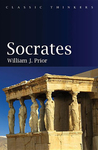
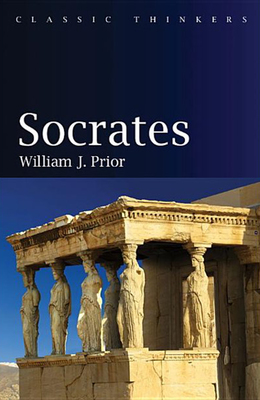
Socrates (Classic Thinkers)
William J. Prior
Socrates is one the most important thinkers in western philosophy, yet he remains enigmatic, having left behind no works of his own. Instead, his thought is understood primarily through the work of his followers, particularly Plato. Yet Plato's dialogues can offer conflicting portraits of Socrates. On the one hand, he is portrayed as “barren of wisdom”: he has questions but no answers. On the other, he appears to be “fertile”: he has important things to say about those questions. Can he be both?
Although Plato’s works focus on Socrates' questions, not his answers, a careful reading can reveal many of Socrates’ likely views. In this accessible introduction, William Prior assesses Socrates the man, his famous trial, and the nature of his philosophy. He explores Socrates' intellectualism, conception of the good life, his religious views and his thoughts concerning justice. All the way through, Prior reflects on Socrates’ distinctive method of asking questions, and the enormous influence he has had on philosophy to this day. -
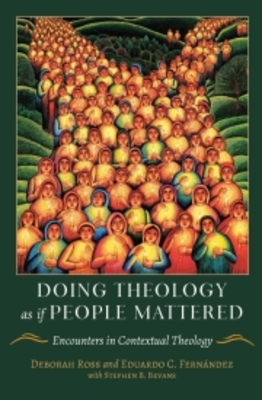
Doing Theology as If People Mattered
Deborah Ross and Eduardo C. Fernandez
This book narrates a reflexive account of the "doing" of contextual theology at the Jesuit School of Theology (JST) of Santa Clara University. The collection explores practicing contextual theology in the classroom and beyond, in service, international immersions, interreligious dialogue, and mission.
This collection narrates the story of contextual theology at JST: how the School came to select this theological method and how it guides the vision and mission of the School; how contextual theology shapes pedagogy and work in the classroom; how contextual theology and education flourish in ministerial praxis in the local intercultural San Francisco Bay Area; and more.
-
Sacrificing the Church: Mass, Mission, and Ecumenism
Eugene R. Schlesinger
In a context of scandal and decline, the Christian church cannot afford to do business as usual. It must regain its bearings and clarify its nature and purpose. Sacrificing the Church provides this clarity by returning to the church’s foundation: Jesus Christ and him crucified. It presents an ecclesiological vision in which every aspect of the church’s life flows from and expresses the one sacrifice of Christ. This sacrifice is the basis of every ecclesial experience, the form and content of the church’s life, a life which shares in the eternal Trinitarian life of God. By and as Christ’s sacrifice we are introduced into the divine life. This participation plays out in three key areas, which set the church’s agenda in the contemporary world: its worship of God (Mass), mission to the world (mission), and efforts toward the unity of all people, beginning with divided Christians (ecumenism).
-
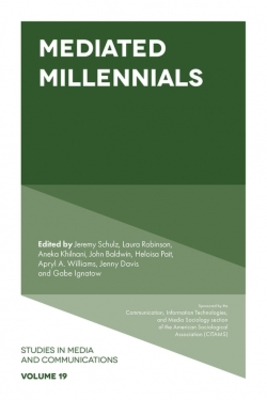
Mediated Millennials Vol: 19
Jeremy Schulz, Laura Robinson, Aneka Khilnani, John Baldwin, Heloisa Pait, Apryl A. Williams, Jenny Davis, and Gabe Ignatow
Sponsored by the Communication, Information Technologies, and Media Sociology section of the American Sociological Association (CITAMS), Volume 19 of Emerald Studies in Media and Communications draws on global case studies that examine media use by millennials. By bringing together contributors and case studies from four continents to examine millennial digital media practices, the volume charts out multiple dimensions of Gen Y’s digital media engagements: smartphone use among Israelis, the activities of Brazilian youths in LAN houses, selfies in the New Zealand context, and American millennials engaged in a variety of digital pursuits ranging from seeking employment, to content creation, to gaming, to consuming news and political content. Through these case studies we see parallels in the mediated millennial experience across key digital venues including Twitter and YouTube, and MMOs. None-the-less, contributors also prompt us to keep in mind the importance of those millennials without equal access to resources who must rely on public venues such as libraries and LAN Houses. Across these venues and arenas of practice, the research provides an important collection of research shedding important light on the first generation growing up with the normative expectation to perform digital identity work, create visual culture, and engage in the digital public sphere.
-
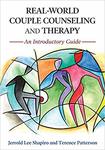
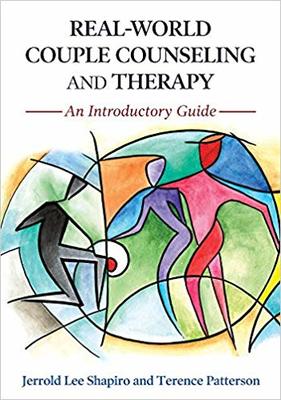
Real-World Couple Counseling and Therapy: An Introductory Guide (First Edition)
Jerrold Lee Shapiro and Terence Patterson
Real-World Couple Counseling and Therapy: An Introductory Guide provides practitioners with an inclusive exploration of the unique features, challenges, and opportunities of contemporary couple counseling. Integrating CBT, existential, and systems approaches, and based on best available research, the text offers guidelines for beginning couple therapists along with breadth and depth of coverage. Comprehensive and pragmatic, it examines the essence of the field: assessment, ethics, treatment planning, effective interventions, pitfalls, and best practices.
Rich with lively examples, vignettes, and dialogues throughout, several unique features are synthesized throughout the text: a perspective from almost a century of experience doing and teaching graduate-level couple therapy, a unique connection between stages of development and appropriate interventions, an integrated exploration of the effects of culture and gender, a unique focus on male clients in couple work, and the “point-counterpoint” perspectives of CBT and existential approaches.
Real-World Couple Counseling and Therapy contains essential information for 21st century practitioners and is ideal for graduate courses and practitioners in counseling, therapy, and social work.
-
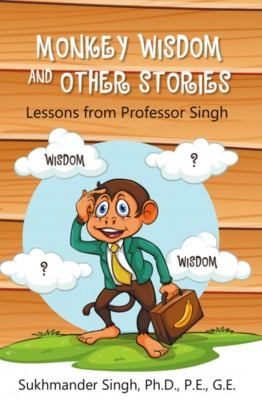
Monkey Wisdon and Other Stories: Lessons from Professor Singh
Sukhmander Singh
During my teaching career for 25 years at Santa Clara University, I found a rather interesting yet engaging way to make a point to my students. I would pause and tell a story with animal actors, especially a monkey among them. These stories are short but full of wit and wisdom to help students develop good study habits and to become successful in their careers. Not all of them are my original stories. Although some of them are made from my imagination, others have been adapted from folk tales and have been given a little bit of a spin to bring out a moral to each story.
-

Curaçao: Costa de cemento, pueblo de prisión
Christina Soto van der Plas
“En Curaçao habitan las anécdotas, expulsadas de la historia y la economía moderna. No tiene uso, no tienen cabida” Como ocurre con los otros regionalismos, la identidad latinoamericana es una ficción ensamblada con partes heterogéneas.
En Curaçao: costa de cemento, pueblo de prisión, libro ganador del Premio Nacional de Crónica Joven Ricardo Garibay 2019, Christina Soto van der Plas elige a la pequeña isla antillana para diseccionar, con una prosa dura y exacta, la construcción identitaria.
Mientras que la primera parte del libro se sirve del ensayo histórico, la segunda utiliza transcripciones que se convierten en la mirada crítica del libro. Estamos ante un experimento literario destinado a abrir sendas creativas.
-
Behavioral Finance: The Second Generation
Meir Statman
Behavioral finance presented in this book is the second-generation of behavioral finance. The first generation, starting in the early 1980s, largely accepted standard finance’s notion of people’s wants as “rational” wants—restricted to the utilitarian benefits of high returns and low risk. That first generation commonly described people as “irrational”—succumbing to cognitive and emotional errors and misled on their way to their rational wants. The second generation describes people as normal. It begins by acknowledging the full range of people’s normal wants and their benefits—utilitarian, expressive, and emotional—distinguishes normal wants from errors, and offers guidance on using shortcuts and avoiding errors on the way to satisfying normal wants. People’s normal wants include financial security, nurturing children and families, gaining high social status, and staying true to values. People’s normal wants, even more than their cognitive and emotional shortcuts and errors, underlie answers to important questions of finance, including saving and spending, portfolio construction, asset pricing, and market efficiency.
-
College Physics for the AP Physics 1 Course (2nd Edition)
Gay Stewart, Roger Freedman, Todd Ruckell, and Philip R. Kesten
College Physics for the AP® Physics 1 Course is the first textbook to integrate AP® skill-building and exam prep into a comprehensive college-level textbook, providing students and teachers with the resources they need to be successful in AP® Physics 1. Throughout the textbook you’ll find AP Exam Tips, AP® practice problems, and complete AP® Practice Exams, with each section of the textbook offering a unique skill-building approach. Strong media offerings include online homework with built-in tutorials to provide just-in-time feedback. College Physics provides students with the support they need to be successful on the AP® exam and in the college classroom.
-
Comparative and Global Environmental Law and Policy
Tseming Yang, Anastasia Telesetsky, Lin Harmon-Walker, and Robert V. Percival
Written by leading scholars and experts with extensive practice and teaching experience in the field, Comparative and Global Environmental Law and Policy offers a student-friendly approach to the study of a rapidly evolving and important area of law. Its multi-jurisdictional selection of judicial opinions and legal materials introduces students to the worldwide reach of environmental law. Through its substance, the book familiarizes students not only with governing and emerging legal principles but also demonstrates how legal norms are applied to specific issues and contexts, illustrating how law-on-the-books becomes law-in-action. Student understanding is reinforced by problem exercises and discussion questions.
Printing is not supported at the primary Gallery Thumbnail page. Please first navigate to a specific Image before printing.