
-
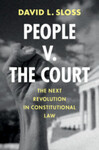
People v. the Court: The Next Revolution in Constitutional Law.
David L. Sloss
The Constitution divides power between the government and We the People. It grants We the People an affirmative, collective right to exercise control over the government through our elected representatives. The Supreme Court has abused its power of judicial review and subverted popular control of the government. The Court's doctrine divides constitutional law into rights issues and structural issues. Structural constitutional doctrine ignores the Constitution's division of power between the government and We the People. The Court's rights doctrines fail to recognize that the Constitution grants the People an affirmative, collective right to exercise control over our government. People v. The Court presents an indictment of the Supreme Court's constitutional doctrine. It also provides a set of proposals for revolutionary changes in the practice of judicial review that are designed to enable We the People to reclaim our rightful place as sovereigns in a democratic, constitutional order
-
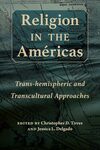
Religion in the Américas: Trans-hemispheric and Transcultural Approaches
Christopher D. Tirres and Jessica L. Delgado
Religion in the Américas explores the fluid, dynamic, and complex nature of religion across Latin America and its diasporic communities in the United States. Utilizing a transdisciplinary and trans-hemispheric lens, this groundbreaking anthology transcends traditional scholarly boundaries—geographical, disciplinary, and temporal—as it explores ideas and cultural practices that share a common history of Iberian colonialism.
This robust collection of essays forges a dialogue among scholars throughout the Americas who represent a variety of disciplinary perspectives. The book is divided into five sections: “Fluidity in the Afro-Latine Diaspora,” “Aesthetics in Las Américas,” “Critical Feminist Epistemologies and Activism,” “The Limits of Institutional Religion,” and “Spiritual Invasions and Contagions.” Throughout the volume, the concept of “experience” serves as a foundational lens, as chapters examine how individuals and communities actively interpret and negotiate their realities within diverse historical and social contexts.
Focusing on religion as a culturally conditioned epistemic practice, Religion in the Américas invites readers to engage with religion in the Americas on multiple, intersecting levels of knowledge, including local insights, scholarly analyses, and the positionality and queries of readers themselves. The book’s dialogical approach encourages not only continual reevaluation of the complexities of religious experience in the Americas but also creative innovation that will inspire new avenues of inquiry. -
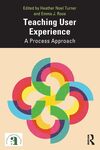
Teaching User Experience: A Process Approach
Heather Noel Turner and Emma Rose
Outlining a process approach, this book offers a theoretical and pedagogical framework for how to teach user experience (UX) from a technical and professional communication (TPC) perspective.
Recognizing that pedagogy is local to an institution, context, and community, the collection includes teaching cases and stories that demonstrate how instructors in TPC uniquely approach the complexity of teaching UX. This book introduces a six-stage process (empathize, define, design, evaluate, iterate, and implement) that instructors can adapt to their own classrooms. It includes case studies that showcase innovative teaching using the six-stage process, such as creating accessible products for community partners with disabilities and culturally responsive content using Indigenous research methods. This book incorporates Black and Indigenous design perspectives, bridging theory and practice to prepare students for ethical design work.
This book will appeal to instructors teaching UX within TPC programs and administrators interested in curricular innovation to bring more UX into their programs. The collection can also be used for postgraduate pedagogy courses offered within TPC programs.
-
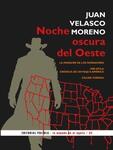
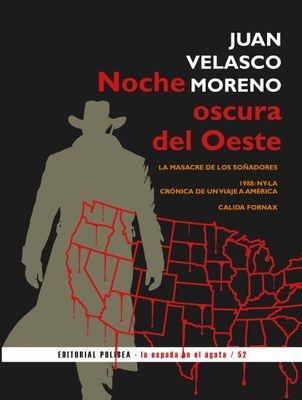
Noche Oscura del Oeste
Juan Velasco-Moreno and María Velasco-Moreno
Juan Velasco presents The Massacre of the Dreamers as an allegory, a symbolic transposition of a territory and its time, perhaps a prophecy unintentionally in its creative moment, already transformed into a visionary announcement of a disoriented and foolish future (...) The Massacre of the Dreamers contains dreamers interwoven within it, all those who have left their dreams in an unredeemed West (Tomás-Néstor Martínez Álvarez).
The America of 1988: NY-LA, appears to us as a liquid—perhaps gaseous—reality, as a “no-place,” an indelible part of a mythical but paradoxically tangible geography, without which it is impossible to understand our own vital and cultural geography; the America clinging to its religion of the ephemeral; the America of madmen wandering the city streets, like unexpected body snatchers; the America of the unbearable kitsch of pink flamingos. (Juan José Martín Ramos).
In the third part, Calida Fornax, Juan Velasco sublimates and contextualizes the mythical and legendary California. Early chronicles had not entered the literary discourse because this history does not "exist" in present-day Anglo-American California, and therefore has not been literaryized. This is precisely what Chicano muralists, poets, and writers—like Juan Velasco—knowledgeable about this history of the North American colonial period, intentionally erased from schools, manage to sublimate. (Armando Miguélez).
The present volume, Dark Night of the West, compiles in its three works a history of violence, the diary of a disquiet, and the representation of the violent epic upon which collective identity is founded. -
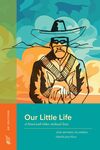
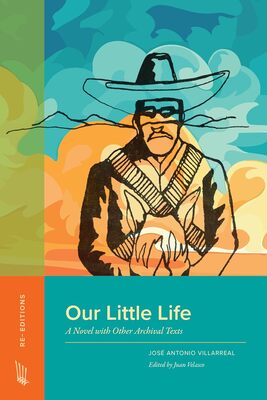
Our Little Life: A Novel with Other Archival Texts
José Antonio Villarreal and Juan Velasco-Moreno
Our Little Life is the original title of José Antonio Villarreal’s groundbreaking 1959 novel Pocho, which shaped Mexican-American literature for decades. Pocho narrated the experiences of and challenges to the Mexican-American community in 1930s Silicon Valley through the story of Richard Rubio and his family, ending with the U.S.’s entry into World War II. With this new edition, author and editor Juan Velasco restores Villarreal’s original vision for his novel. Published in cooperation with the Villarreal estate, this edition of Our Little Life is based on archival materials from the Villarreal Special Collection at Santa Clara University.
Our Little Life offers a much longer version of the Pocho story that extends a further 100 pages into the postwar period and follows Richard Rubio’s return from war and the changing shape of Mexican-American life in the 1940s. This newly discovered manuscript reveals Villarreal’s attention to Rubio’s struggles with PTSD and his efforts to depict a community and a family’s struggles with identity, belonging, and survival in postwar California. Our Little Life is an important work of archival recovery that sheds new light on Villarreal’s authorship and his place not only in Mexican-American literature but in the twentieth-century American literary canon.
This first publication of Our Little Life includes a scholarly introduction that places this unpublished novel in the landscape of contemporary Mexican-American literary studies and offers a brilliant examination of how novels grow and change. The volume also includes materials from the Villarreal Special Collection that recontextualize the writer’s vision, editing, and marketing of this and later novels. Our Little Life will be of interest not only to everyone in Mexican-American literary studies, but also to scholars of postwar America, women and gender studies, LGBTQ studies, ethnic studies, and migration and border studies. -
Comparative Environmental Law
Tseming Yang, Anastasia Telesetsky, and Sara K. Phillips
Discussing the law in theory and in practice, Comparative Environmental Law identifies the ways in which regulatory systems converge or diverge, examining key developments in international legal frameworks from every continent. Expert contributors review different comparative approaches and examine how these can be applied to the study of environmental law.
-
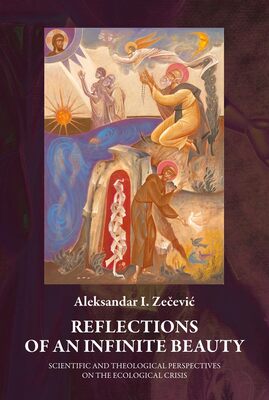
Reflections of an Infinite Beauty: Scientific and Theological Perspectives on the Ecological Crisis
Aleksandar Zečević
It is an uncommon privilege to encounter a scholarly work that situates itself at the confluence of science and theology—a text that engages with equal rigor the intricacies of atomic structures and heavenly orders, the mechanisms of biochemical processes and the intimations of divine immanence. In an era where the interaction between theology and science frequently manifests as disjointed monologues rather than a coherent dialogue, this volume emerges as a call to intellectual and spiritual communion. It is both humbling and illuminating to witness a scientist of Professor Zečević’s caliber traverse with such finesse the terrain of theological inquiry, addressing the interrelations of nature, creation, and the contemporary ecological predicament.
-
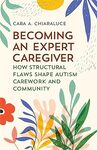
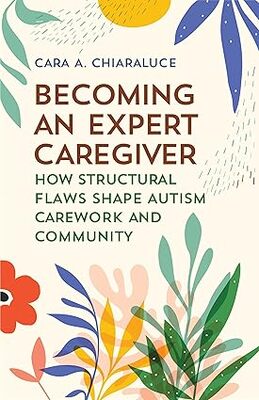
Becoming an Expert Caregiver: How Structural Flaws Shape Autism Carework and Community
Cara A. Chiaraluce
“The hardest thing is dealing with the rest of the world. And we kind of accommodate our lives around that. But the rest of the world doesn’t.” These poignant words were spoken by Charlotte, a mother and primary caregiver of a five-year-old autistic boy, and her words reference the structural arrangements of our world that shape autism carework today. This book features the voices of fifty primary caregivers of autistic and neurodivergent children who illuminate the process through which laywomen become expert caregivers to provide the best care for their children. Expert caregiving captures an intensification of traditional family carework – meeting dependents’ financial, emotional, and physical needs – that transcends the walls of one’s private home and family and challenges the strict boundaries between many worlds: lay and professional, family and work, private and public, medical and social, and individual and society. The process of becoming an expert caregiver spotlights several interesting paradoxes in sociological literature, particularly regarding gender, family, and medicalization, and often forgotten structural flaws in “the rest of the world.”
Throughout the chapters in this book, the expert caregiver is one person who faces unbelievably daunting tasks of filling or reforming persistent institutional gaps, primarily in education and health care, and subverting ableist cultural norms. Without institutional support, answers to their questions, or pragmatic avenues to access resources, lay caregivers become the experts. Their trials and tribulations, especially when navigating the boundaries of professional/lay and private/public worlds, illuminate a type of carework that is increasingly relevant to a growing number of young families caring for neurodivergent, disabled, medically fragile, and/or chronically ill children. These stories offer a vivid picture of the often invisible complex challenges and structural forces that drive individuals to become expert caregivers in the first place.
-
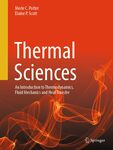
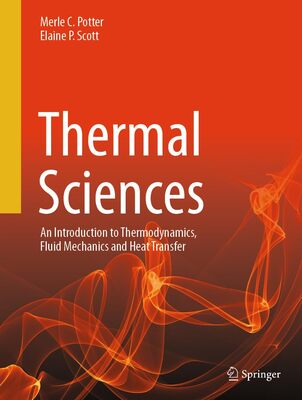
Thermal Sciences: An Introduction to Thermodynamics, Fluid Mechanics and Heat Transfer
Merle C. Potter and Elaine P. Scott
Thermal Sciences may be used in some curricula with two required courses, and in others with only one thermal science course. This text is written so it can be used in either the two-semester sequence of Thermodynamics and Fluid Mechanics or in the course that also introduces Heat Transfer. Thermodynamics and Fluid Mechanics texts have increased in length over the years so that now they each may contain 1000 pages. Much of that material is never used in the classroom and much of it tends to confuse the students with material that is not significant to the subject at hand. We have attempted to eliminate much of that material, especially the material that is most often reserved for an advanced course.
The Thermodynamics Part includes more material than can be covered in a one-semester course; this allows for selected material on power and refrigeration cycles, psychrometrics, and combustion. The Fluid Mechanics Part also contains more material than can be covered in aone-semester course allowing potential flows, boundary layers, or compressible flow to be included. The heat transfer material that is included in various chapters can be inserted, if desired, as it is encountered in the text. A one-semester service course for non-mechanical engineers may be organized with selected sections from both the Thermodynamics Part and the Fluid Mechanics Part.
Thermodynamics is presented in chapters 1 through 9, fluid mechanics in Chapters 10 through 17, and the introductory material of heat transfer is included in Sections 3.6, 4.11, and 16.6.6. All the material is presented so that students can follow the derivations with relative ease; reference is made to figures and previous equations using an easy-to-follow style of presentation. Numerous examples then illustrate all the basic principles of the text. Problems at the end of each chapter then allow for application of those principles to numerous situations encountered in real life.
The problems at the end of each chapter begin with a set of multiple-choice-type questions that are typical of the questions encountered on the Fundamentals of Engineering Exam (the exam usually taken at the end of the senior year to begin the process of licensure) and the Graduate Record Exam/Engineering. Those questions are followed with problems, often grouped according to topics and ordered by level of difficulty, which illustrate the principles presented in the text material. Answers to selected problems are included at the end of the text.
-
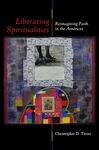
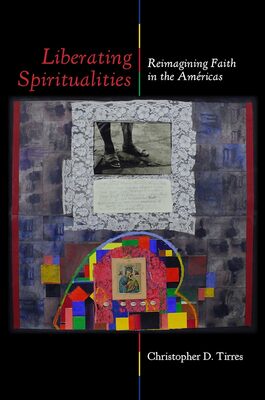
Liberating Spiritualities: Reimagining Faith in the Américas
Christopher D. Tirres
A new perspective on spirituality and social change as seen through the work of six visionary thinkers
In Liberating Spiritualities, Christopher D. Tirres offers an in-depth exploration of spirituality as a catalyst for social transformation, showcasing the profound insights of six distinguished twentieth-century liberation thinkers from across the Américas. This thought-provoking work examines the contributions of Marxist philosopher José Carlos Mariátegui, renowned educator and philosopher Paulo Freire, innovative constructive theologian Virgilio Elizondo, influential cultural and feminist theorist Gloria Anzaldúa, activist mujerista theologian and social ethicist Ada María Isasi-Díaz, and groundbreaking ecofeminist theologian Ivone Gebara.
Tirres examines the distinct yet interconnected philosophies of these figures, showcasing their unified critique of colonial Christendom and their deep commitment to the marginalized. He adeptly articulates how their diverse religious and philosophical backgrounds come together in a shared vision of spirituality as a fundamental aspect of human life and intelligence. He further illuminates how these thinkers advocate for spirituality as a non-reductive, life-affirming practice, transcending traditional boundaries and offering an integrated approach to faith, culture, and social justice. Their collective insights form a persuasive case for re-envisioning spirituality as a crucial element in the quest for a more just and compassionate world.
Liberating Spiritualities is not only a tribute to these six influential figures but also a critical reflection on the relevance of their ideas in today’s global context. Tirres’s transdisciplinary study bridges liberationist and pragmatic insights, offering readers a fresh, highly original interpretation of socially engaged spirituality, making this book an essential resource for those seeking to understand the transformative power of spirituality in the pursuit of social justice and human dignity.
Printing is not supported at the primary Gallery Thumbnail page. Please first navigate to a specific Image before printing.